

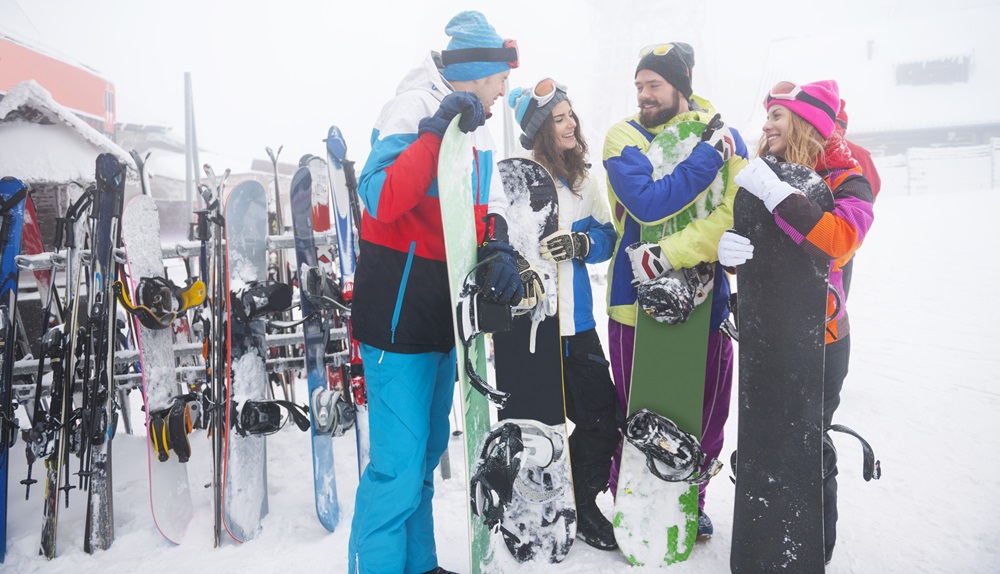
You’ve probably seen those bundled ski gear for sale deals that promise everything you need at one low price.
Sounds great, right? But here’s what most shops won’t tell you: those packages often stick you with equipment that doesn’t work together. You end up with boots that don’t fit your bindings or skis too stiff for your actual skill level.
We’re going to show you exactly how to negotiate better packages and what to check before you hand over your money.
What Makes Ski Equipment “Compatible” Anyway?
Compatibility isn’t just about parts fitting together. Your ski boots need to match your binding system. Your ski length should work with your weight and ability. Even your poles need to match your height and skiing style.
When shops bundle gear, they’re often clearing old inventory. That 2019 intermediate ski might get paired with 2024 beginner boots just because they’re both sitting in the warehouse. The shop saves storage costs. You get stuck with gear that fights against itself.
Here’s the reality: about 60% of beginner skiers quit within their first season, and poorly matched equipment is a major reason why. When your gear doesn’t work together, skiing feels harder than it should.
How Do Binding Standards Actually Work?
This gets technical fast, but you need to know the basics. There are two main binding systems: Alpine (downhill) and Touring (backcountry). They don’t mix.
Within Alpine bindings, you’ll find different DIN ranges. DIN measures how much force it takes for your boot to release from the binding. A beginner might need DIN 3-10. An expert needs DIN 8-16.
Compatibility Rule: Your boots must match your binding’s ISO standard. Alpine boots fit Alpine bindings. Touring boots fit Touring bindings. Sounds obvious, but package deals sometimes miss this.
| Skier Level | Recommended DIN Range | Typical Boot Flex |
| Beginner | 3-10 | 60-80 |
| Intermediate | 6-12 | 80-100 |
| Advanced | 8-16 | 100-130 |
Most shops will adjust DIN settings for free. But if the binding’s range doesn’t match your needs, you’re stuck buying new bindings anyway.
What Should You Actually Check Before Buying?
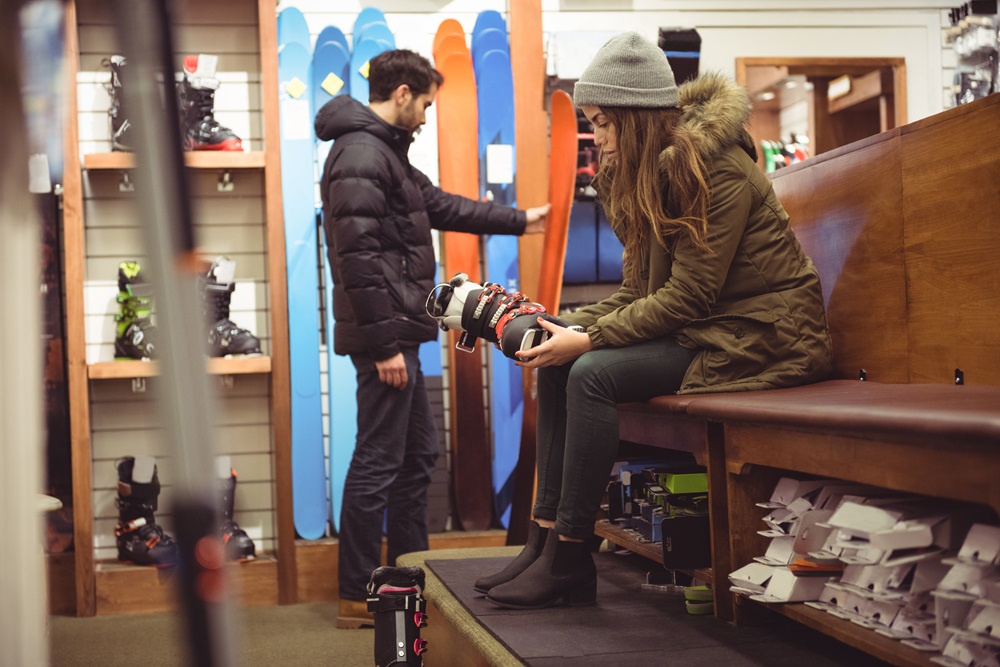
Start with boot fit. Seriously. Your boots matter more than your skis. If the package includes boots that hurt after five minutes in the store, they’ll be torture on the mountain.
Try this: wear the boots for at least 15 minutes while shopping. Walk around. Flex forward. If your toes are crunched or your heel lifts, those boots don’t fit.
Next, check if the skis match your ability and weight. A 120-pound beginner doesn’t need expert-level stiff skis. A 200-pound intermediate shouldn’t be on beginner flex skis that’ll fold under pressure.
Ski length matters too. Stand the skis upright next to you. For beginners, skis should reach somewhere between your chin and nose. Intermediates can go nose to forehead. Experts might want forehead to top of head.
Poles get ignored in most package deals, but wrong pole length throws off your whole posture. When you hold the pole upside down (grip on the ground, your hand under the basket), your elbow should make a 90-degree angle.
How Do You Actually Negotiate These Packages?
Shops build wiggle room into package prices. They expect negotiation. Here’s your leverage: knowledge.
Walk in knowing what each piece should cost separately. Search the same models online. You’ll probably find the ski retails for $400, boots for $300, bindings for $150, and poles for $50. That’s $900 total. If they’re offering the “package” for $850, you’re barely saving anything.
Try this approach: “I see these skis retail for $400, but they’re two years old. I’ll take the package for $650 if you throw in a binding adjustment and hot wax.”
Shops make higher margins on services than gear. They might cut the price if you agree to buy season waxing or edge sharpening. You need those services anyway.
Timing helps too. Shop in late March or early April when they’re clearing inventory for summer. You’ll find better deals and staff who actually want to move product.
What Happens If You Ignore Compatibility?
Let’s get real about consequences. Mismatched gear doesn’t just make skiing harder—it makes it dangerous.
Boots that don’t match your bindings won’t release properly in a fall. That’s how knee injuries happen. ACL tears cost an average of $20,000 to repair and need six to nine months of recovery.
Skis that don’t match your ability either scare you (too aggressive) or hold you back (too soft). You won’t progress, and you probably won’t enjoy yourself enough to keep skiing.
Wrong pole length seems minor until you realize it’s throwing off your balance on every turn. You’ll compensate with bad habits that are hard to break later.
We’re not trying to scare you. We’re trying to save you money, pain, and frustration. A properly matched package that costs $100 more upfront beats a cheap mismatched set every single time.
Before you buy any ski gear for sale package, run through this compatibility checklist.
Make sure your boots fit your bindings. Verify your skis match your size and skill. Check that your poles put your arms at the right angle. Negotiate based on knowledge, not just price.
Frequently Asked Questions
Why are some ski gear for sale packages poorly matched?
Ans: Shops often bundle old inventory together, pairing mismatched skis, boots, or bindings that don’t properly work together, just to clear warehouse stock.
How do you know if ski boots are compatible with bindings?
Ans: Your boots must match your binding’s ISO standard and system type, such as Alpine with Alpine bindings or Touring with Touring bindings.
What should you check first before buying a package deal?
Ans: Start with boot fit by wearing them for 15 minutes, walking, and flexing to ensure no toe crunching or heel lift.
How can you negotiate better ski gear for sale packages?
Ans: Research individual retail prices, compare totals, and use that knowledge to request discounts, added services, or price adjustments.
What happens if you ignore equipment compatibility?
Ans: Mismatched gear can prevent proper binding release, increase injury risk, slow progression, and make skiing harder and less enjoyable.