


Personal injury claims in New York may be delayed by ongoing medical treatment, missing records, disputed fault, insurance coverage issues, multiple responsible parties, public entity rules, lien review, child settlement approval, or litigation scheduling. A delay does not always mean the claim is weak. It often means more evidence is needed before liability, damages, and settlement value can be evaluated fairly. People reviewing accident-related timelines may use a personal injury lawyer Long Island resource to understand how claims are generally reviewed.
Quick Answer
A New York personal injury claim may be delayed when injuries are still being treated, medical records are incomplete, fault is disputed, insurance coverage is unclear, multiple parties may be responsible, or settlement value cannot be evaluated yet. Claims may also take longer when a lawsuit is filed, discovery is needed, experts are involved, public entity notice rules apply, or a child settlement requires court approval.
Key Takeaways
- Claims often slow down when the injured person is still treating or future medical care is unknown.
- Missing medical records, bills, wage documents, photos, video, and witness statements can delay settlement review.
- New York no-fault motor vehicle claims include early insurance deadlines, including written notice generally no more than 30 days after the accident.
- Many negligence-based personal injury claims in New York have a three-year limitations period, while wrongful death, public entity, and other matters may involve different rules.
- Claims involving public corporations may require notice of claim within 90 days when notice is required.
- Comparative fault disputes may reduce damages and make negotiations take longer.
- Child injury settlements may require extra court approval steps under New York court rules.
Why Some Injury Claims Move Slowly
A personal injury claim is not only about proving that an accident happened. It must also show who was responsible, what injuries were caused by the accident, how much medical care was needed, what income was lost, whether future care may be necessary, and what insurance coverage applies.
A claim may move slowly when there are:
- Serious injuries
- Ongoing treatment
- Surgery recommendations
- Missing medical records
- Disputed liability
- Conflicting witness statements
- Multiple defendants
- Several insurance policies
- Public property or government involvement
- Child settlement approval
- Expert review
- Court scheduling delays
Some delays are avoidable. Others are part of building a claim carefully before settlement discussions become meaningful.
Medical Treatment Is Still Ongoing
One of the most common reasons for delay is ongoing medical treatment. A claim may be difficult to value while the injured person is still recovering, waiting for imaging, attending therapy, considering surgery, or receiving specialist care.
Ongoing treatment may affect:
- Current medical bills
- Future medical expenses
- Work restrictions
- Lost income
- Permanent limitations
- Pain and suffering
- Disability evaluation
- Settlement value
Settling too early may create problems if the full injury picture is not yet known. For example, a back injury claim may look smaller before MRI results, specialist review, injections, surgery recommendations, or long-term restrictions are documented.
Medical Records Are Missing or Incomplete
Insurance companies usually review medical records before making settlement offers. If records are missing, incomplete, inconsistent, or delayed by providers, the claim may stall.

Missing documentation may include:
- Emergency room records
- Hospital records
- Imaging reports
- Specialist notes
- Physical therapy records
- Surgery records
- Pain management notes
- Prescription records
- Medical bills
- Work restriction notes
- Future care recommendations
A broader guide to evidence for personal injury claims can help explain why medical records, billing proof, accident evidence, and damages documentation often need to work together.
The Injury Has Not Reached a Clear Medical Point
Some claims slow down because the injury has not reached a clear medical point. This does not always mean full recovery. It means the treating providers have enough information to explain diagnosis, treatment progress, future care, and long-term limitations.
This may matter when there is:
- Surgery still pending
- Ongoing physical therapy
- Unclear prognosis
- Permanent impairment evaluation
- Future treatment recommendation
- Delayed healing
- Complications
- Specialist referral
- Continued pain or functional limitation
A settlement demand prepared too early may leave out future costs or long-term impact. A delay may be necessary when the medical picture is still developing.
Fault Is Disputed
A claim may be delayed when the insurance company, defendant, property owner, driver, contractor, marina, nursing home, or another party disputes fault. In these cases, the claim may need more evidence before settlement value can be reviewed.
Fault disputes may involve:
- Conflicting witness statements
- Disputed police or incident reports
- Missing surveillance footage
- Unclear accident location
- Lack of photos
- Weather issues
- Property maintenance questions
- Commercial driver conduct
- Construction safety records
- Nursing home charting
- Dog owner history
- Boating operation evidence
New York comparative negligence rules can make fault disputes especially important. Under CPLR § 1411, culpable conduct by the claimant does not automatically bar recovery in many personal injury actions, but damages may be reduced in proportion to the claimant’s share of fault.
Insurance Coverage Is Unclear
Insurance coverage issues can delay a claim even when liability appears strong. The claim may require time to identify the correct policy, confirm coverage, review exclusions, or determine whether multiple insurance policies apply.

Coverage questions may include:
- Which insurer covers the accident?
- Was the policy active?
- Is the vehicle commercial or personal?
- Is there umbrella coverage?
- Is a rental company involved?
- Is a property owner insured?
- Is a subcontractor covered?
- Is a marina or vessel owner insured?
- Are policy limits too low for the injury?
- Is the insurer denying coverage?
A car accident attorney resource may help explain why no-fault benefits, liability coverage, serious injury evidence, and insurance communication can move on different timelines after a crash.
No-Fault Paperwork Can Create Timing Problems
New York motor vehicle claims may involve no-fault insurance issues in addition to liability claims. The New York Department of Financial Services explains that written notice of a no-fault claim must generally be submitted as soon as reasonably practicable, but no more than 30 days after the accident unless clear and reasonable justification exists for late filing. DFS also describes separate timing for medical bill and lost wage submissions under Regulation 68.
No-fault delays may involve:
- Late claim notice
- Missing NF-2 forms
- Unsubmitted medical bills
- Lost wage proof delays
- Verification requests
- Independent medical examinations
- Benefit denials
- Arbitration or dispute resolution
- Coordination with health insurance
No-fault delays can affect medical bill payment, wage benefits, and the overall injury claim timeline.
Multiple Responsible Parties Are Involved
Claims often take longer when more than one party may be responsible. Each party may have its own insurance company, attorney, evidence, defenses, and version of events.
Multi-party claims may involve:
- Multi-vehicle crashes
- Commercial truck accidents
- Construction site injuries
- Premises liability claims
- Nursing home negligence
- Rideshare accidents
- Boating accidents
- Product defect issues
- Public property claims
- Workplace accidents with third-party liability
A premises liability attorney resource may help explain why property control, maintenance records, inspection history, and notice evidence can take time to investigate in unsafe-property claims.
Surveillance Footage or Digital Evidence Is Hard to Obtain
Many claims depend on time-sensitive evidence. Video footage may be overwritten quickly. Vehicle data may be deleted. GPS records may not be preserved. Witnesses may become difficult to reach.
Digital and time-sensitive evidence may include:
- Store surveillance footage
- Dashcam footage
- Traffic camera footage
- Building camera footage
- Vehicle event data
- Truck electronic logging records
- Rideshare app records
- Boating GPS data
- Marina camera footage
- Cell phone photos and videos
- Text messages
- Emails
- Incident reports
A claim may be delayed when this evidence must be requested, preserved, reviewed, authenticated, or compared with witness statements.
Wage Loss Records Are Not Ready
Lost income claims can be delayed when wage records are incomplete. The injured person may know they missed work, but the claim usually needs documentation.
Useful wage proof may include:
- Employer letters
- Missed work records
- Pay stubs
- Tax returns
- W-2 forms
- 1099 forms
- Business income records
- Union records
- Disability forms
- Work restriction notes
- Job descriptions
- Return-to-work records
Lost income claims may take longer when the injured person is self-employed, works irregular hours, depends on tips or commissions, has multiple jobs, or cannot return to the same occupation.
Future Medical Care Is Being Evaluated
Future care can affect settlement value. If additional surgery, therapy, medication, injections, rehabilitation, home care, medical equipment, or specialist treatment may be needed, the claim may take longer to evaluate.
Future care documentation may include:
- Treating doctor opinions
- Specialist recommendations
- Surgery evaluations
- Physical therapy plans
- Pain management recommendations
- Life care planning
- Future imaging needs
- Home modification estimates
- Long-term disability review
A claim may slow down because future medical needs must be supported by records rather than assumptions.
The Insurance Offer Is Too Low
Settlement delays often happen when the insurer’s offer does not reflect the injury, medical bills, lost income, pain, limitations, future care, or liability evidence. Negotiation can take time because both sides may review the claim differently.
Low offer disputes may involve:
- Injury causation
- Treatment necessity
- Prior injuries
- Medical bill amounts
- Lost income proof
- Pain and suffering
- Future care
- Comparative fault
- Policy limits
- Disputed witness statements
Publicly available personal injury case results may provide general context, although every claim depends on its own facts, evidence, injuries, insurance coverage, and applicable law.
A Lawsuit Has Been Filed
When settlement negotiations do not resolve the claim, filing a lawsuit may become necessary. Litigation can extend the timeline because formal procedures, deadlines, and court schedules are involved.
Litigation may include:
- Complaint filing
- Service of legal papers
- Defendant answer
- Discovery demands
- Document exchange
- Depositions
- Medical examinations
- Expert disclosure
- Motions
- Settlement conferences
- Mediation
- Trial preparation
- Trial
A lawsuit does not mean the case will definitely go to trial. Many cases settle during litigation, but discovery and court scheduling can add time.
Discovery Takes Time
Discovery is the formal evidence exchange process after a lawsuit begins. It can be one of the longest stages of a personal injury claim.
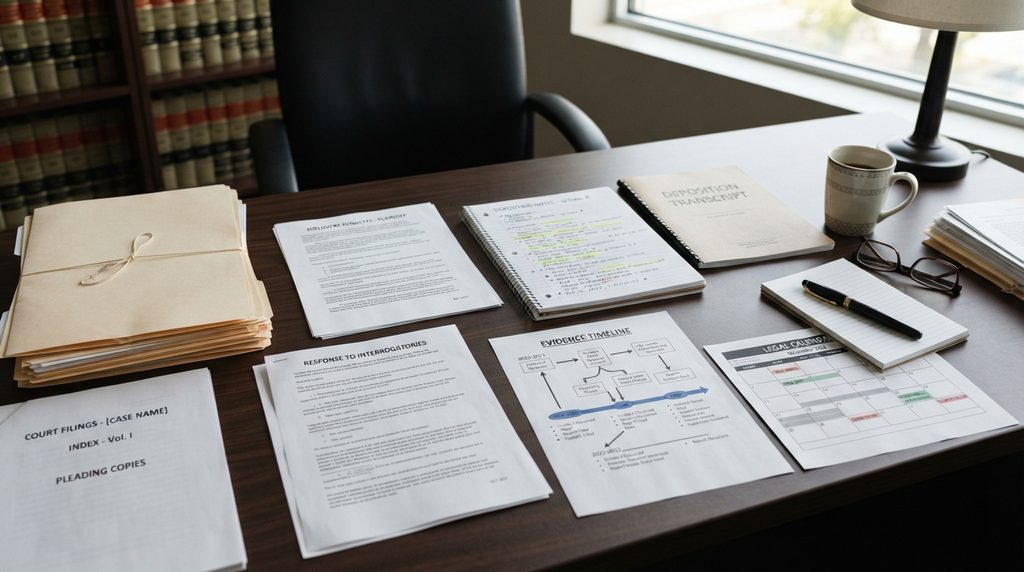
Discovery may involve:
- Written questions
- Document requests
- Medical authorizations
- Employment records
- Insurance documents
- Maintenance records
- Safety policies
- Prior incident records
- Photos and videos
- Depositions
- Expert inspections
- Medical examinations
Discovery may take longer when records are incomplete, parties disagree over what must be produced, witnesses are unavailable, or expert review is needed.
Expert Review Is Needed
Some claims require expert analysis before liability or damages can be evaluated. Expert review may help explain how the accident happened, whether safety standards were followed, what caused the injury, or what future care may cost.
Expert review may be needed in:
- Construction accidents
- Truck accidents
- Medical or nursing home claims
- Serious car crashes
- Defective product claims
- Complex slip and fall claims
- Boating accident claims
- Long-term disability claims
- Future earning capacity claims
Expert involvement can strengthen a claim, but it may also add time because records must be gathered, reviewed, and analyzed.
Public Entity Claims Have Special Timing Issues
Claims involving public entities may move differently because special notice requirements can apply. Public sidewalks, public schools, public hospitals, municipal vehicles, public transportation, public docks, government buildings, and public property may involve shorter deadlines.
New York General Municipal Law § 50-e generally requires a notice of claim within 90 days after the claim arises when notice is required for certain tort claims against public corporations.
Public entity claims may be delayed by:
- Identifying the correct public corporation
- Preparing notice of claim
- Confirming the exact location
- Requesting public records
- Reviewing municipal ownership
- Locating maintenance records
- Investigating prior complaints
- Handling hearing or examination requests
These claims should be reviewed early because notice deadlines may arrive long before ordinary lawsuit deadlines.
Child Injury Claims May Require Court Approval
Claims involving injured children can take longer because settlement may require court approval. New York Courts Rule 202.67 addresses settlements of claims by infants and judicially declared incapacitated persons and requires compliance with CPLR 1207 and 1208.
Child settlement approval may involve:
- Medical records
- Settlement petition
- Doctor and hospital charge information
- Attorney fee review
- Expense review
- Proposed order
- Court review
- Fund deposit or protection procedures
These steps are intended to protect the child’s interests, but they can add time after settlement terms are reached.
Liens and Medical Bill Resolution Can Slow Final Payment
Even after settlement is reached, final payment may not be immediate. Medical liens, health insurance reimbursement, unpaid bills, Medicare or Medicaid issues, workers’ compensation liens, and provider balances may need review.
Post-settlement delays may involve:
- Release paperwork
- Lien search
- Health insurance reimbursement
- Medical bill negotiation
- Workers’ compensation lien review
- Medicare or Medicaid review
- Court approval for minors
- Estate paperwork
- Settlement check processing
- Final accounting
This stage can be frustrating because the claim may feel resolved, but payment cannot always be distributed until required items are addressed.
Deadlines Can Affect the Entire Timeline
Deadlines do not only matter at the end of a claim. They can shape the entire process. The New York Courts statute of limitations timetable lists three years from the date of accident for car accidents, three years for many negligence-based personal injury claims, three years for slip and fall claims, and two years from death for wrongful death claims.
Different or shorter deadlines may apply depending on:
- Claim type
- Public entity involvement
- Insurance notice requirements
- No-fault paperwork
- Wrongful death issues
- Product liability issues
- Child injury approval
- Medical bill submission rules
- Evidence preservation needs
A claim can be delayed by evidence review, but it can also be harmed by waiting too long.
Practical Timeline Delay Chart
| Delay Factor | Why It Slows the Claim | What Usually Helps |
| Ongoing treatment | Future care and long-term limitations are not clear yet | Updated medical records and doctor opinions |
| Missing records | Insurer cannot review damages fully | Medical bills, wage proof, reports, and photos |
| Disputed fault | Parties disagree about who caused the accident | Witness statements, video, reports, and expert review |
| Multiple parties | Several insurers or defendants may be involved | Coverage review and liability investigation |
| Low settlement offer | Insurer undervalues injuries or damages | Strong demand package and supporting evidence |
| Litigation | Court process adds formal steps | Discovery, depositions, conferences, and negotiation |
| Public entity claim | Special notice rules may apply | Early location proof and notice review |
| Child settlement | Court approval may be required | Petition, medical records, and settlement documents |
How to Reduce Avoidable Delays
Not every delay can be prevented, but some can be reduced with organized documentation and early evidence preservation.
Helpful steps may include:
- Getting medical care promptly
- Following treatment recommendations
- Keeping all appointments
- Saving medical bills and receipts
- Getting work restrictions in writing
- Saving wage records
- Photographing injuries and property damage
- Collecting witness names
- Saving insurance letters
- Preserving video or digital evidence quickly
- Reporting qualifying accidents
- Tracking deadlines
- Organizing documents by date and category
A well-organized file can make claim review more efficient.
Common Mistakes That Cause Delays
Some mistakes make a claim harder to evaluate and may slow settlement discussions.
Common mistakes include:
- Waiting too long to seek care
- Skipping follow-up appointments
- Not saving bills
- Not requesting incident reports
- Not identifying witnesses
- Not preserving photos or video
- Not documenting lost income
- Not responding to insurance requests
- Giving inconsistent statements
- Posting misleading social media content
- Settling before treatment is complete
- Missing notice or insurance deadlines
The strongest claims usually have consistent medical care, clear records, preserved evidence, and a documented timeline.
When Legal Guidance May Be Useful
Legal guidance may be useful when a claim is delayed because treatment is ongoing, insurance coverage is disputed, fault is unclear, settlement offers are low, multiple parties are involved, public property may be connected, or a lawsuit appears necessary.
A claim-delay review may involve accident reports, medical records, bills, wage proof, insurance policies, witness statements, video, expert review, lien analysis, court filings, and deadline tracking.
People researching local support may review a Farmingdale legal office location when looking for Long Island personal injury claim information.
FAQs About Personal Injury Claim Delays in New York
Why is my personal injury claim taking so long?
A claim may take longer because treatment is ongoing, records are missing, fault is disputed, insurance coverage is unclear, multiple parties are involved, settlement offers are low, or a lawsuit and discovery are needed.
Does a delay mean my personal injury claim is weak?
Not always. Some claims are delayed because injuries are serious, future care is still unknown, or more evidence is needed. A delay may reflect claim complexity rather than claim weakness.
Can missing medical records delay settlement?
Yes. Medical records help show diagnosis, treatment, injury causation, bills, restrictions, and future care needs. If records are missing or incomplete, the insurance company may delay review or request more documentation.
Do public entity claims take longer?
They can. Public entity claims may involve special notice rules, public records, ownership questions, maintenance records, and agency review. New York General Municipal Law § 50-e generally requires notice within 90 days when notice is required.
Can a lawsuit still settle before trial?
Yes. Many lawsuits settle before trial through negotiation, mediation, settlement conference, or agreement after discovery. Filing a lawsuit can add time, but it does not automatically mean the case will be tried.
Final Thoughts
Personal injury claims in New York may be delayed for many reasons, including medical recovery, missing documentation, disputed fault, insurance coverage issues, public entity rules, child settlement approval, discovery, expert review, liens, and low settlement offers. The strongest claims usually move forward with prompt medical care, organized records, early evidence preservation, clear damages documentation, and careful attention to legal and insurance deadlines.