

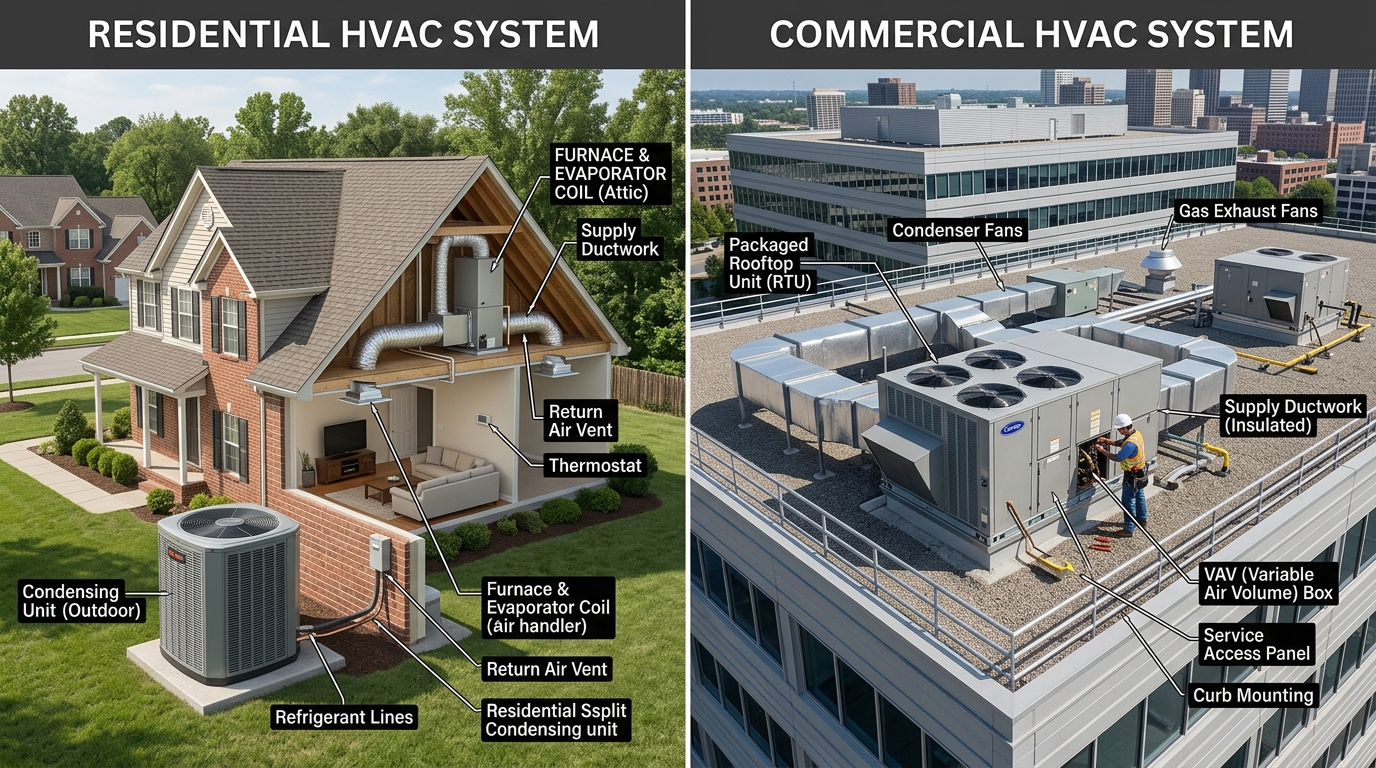
Heating, ventilation, and air conditioning systems play a critical role in maintaining comfort, indoor air quality, and energy efficiency. While many people are familiar with residential HVAC systems used in homes, commercial HVAC systems operate on a much larger scale and often involve more complex equipment, controls, and performance requirements.
Whether serving a single-family home, office building, retail store, restaurant, warehouse, healthcare facility, or industrial property, HVAC systems are designed to regulate temperature, ventilation, humidity, and air quality. However, the equipment, installation methods, maintenance requirements, and operational demands can vary significantly between residential and commercial environments.
Understanding these differences can help homeowners, property managers, and business owners make informed decisions when selecting HVAC equipment, planning upgrades, budgeting for maintenance, or hiring contractors.
Many property owners begin researching commercial HVAC service options when they realize that commercial buildings require specialized expertise beyond traditional residential heating and cooling systems.
Quick Answer
Residential HVAC systems are designed to heat and cool individual homes, while commercial HVAC systems support larger buildings, multiple zones, higher occupancy levels, and more complex ventilation requirements. Commercial systems typically require specialized equipment, advanced controls, larger-scale maintenance programs, and contractors experienced in commercial applications.
Key Takeaways
- Residential and commercial HVAC systems serve different operational needs.
- Commercial systems are typically larger and more complex.
- Commercial HVAC often includes advanced zoning and building controls.
- Installation requirements vary significantly between residential and commercial properties.
- Preventative maintenance is critical in both environments.
- Indoor air quality and ventilation requirements are often more demanding in commercial buildings.
- Energy efficiency strategies differ between homes and businesses.
- Choosing the right contractor can significantly impact system performance and operating costs.
What Are HVAC Services?
HVAC services include the installation, repair, maintenance, replacement, design, and optimization of heating, cooling, ventilation, and indoor air quality systems.
Professional HVAC installation service providers help property owners select equipment, design systems, improve energy efficiency, and maintain comfortable indoor environments throughout the year.
Common HVAC services include:
- Heating system installation
- Air conditioning installation
- System replacement
- Preventative maintenance
- Emergency repairs
- Ventilation improvements
- Indoor air quality solutions
- Energy-efficiency upgrades
- Thermostat installation
- Ductwork modifications
Although these services may appear similar on the surface, the requirements often differ substantially between residential and commercial applications.
Understanding Residential HVAC Systems
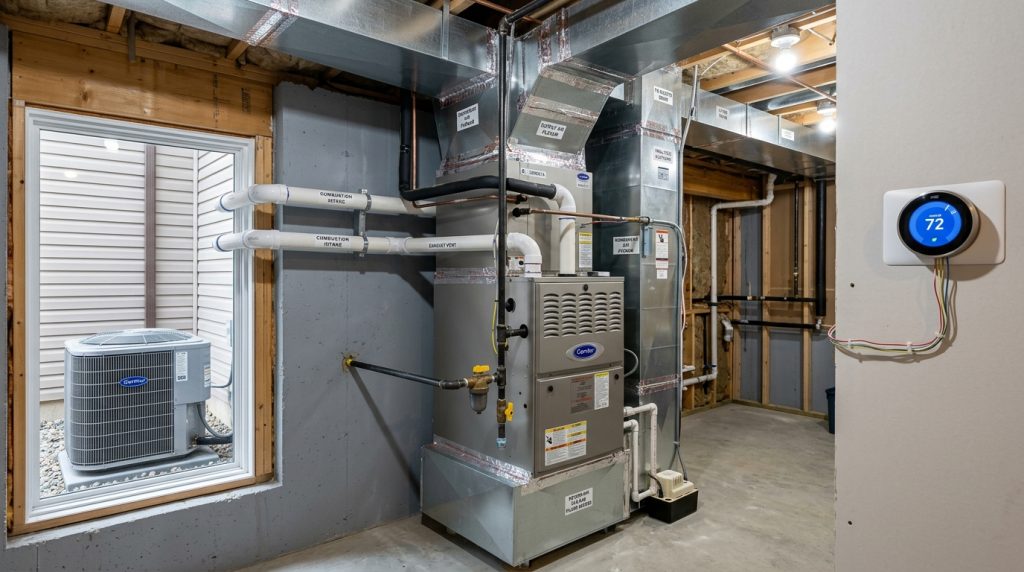
Residential HVAC systems are designed to serve individual homes and smaller residential properties.
Most residential systems include:
- Furnaces
- Air conditioners
- Heat pumps
- Thermostats
- Ductwork
- Air filtration systems
The primary goal is to maintain comfort for occupants while balancing energy efficiency and affordability.
Common Residential HVAC Equipment
Homeowners typically rely on equipment such as:
- Central air conditioning systems
- Gas furnaces
- Electric furnaces
- Heat pumps
- Ductless mini-split systems
- Whole-home humidifiers
- Air purification systems
Most residential systems are controlled through a single thermostat or a limited number of zones.
Residential HVAC Priorities
Residential property owners often focus on:
- Comfort
- Energy efficiency
- Indoor air quality
- Quiet operation
- Equipment lifespan
- Utility cost reduction
While residential HVAC systems can become sophisticated, they generally remain less complex than commercial systems.
Understanding Commercial HVAC Systems
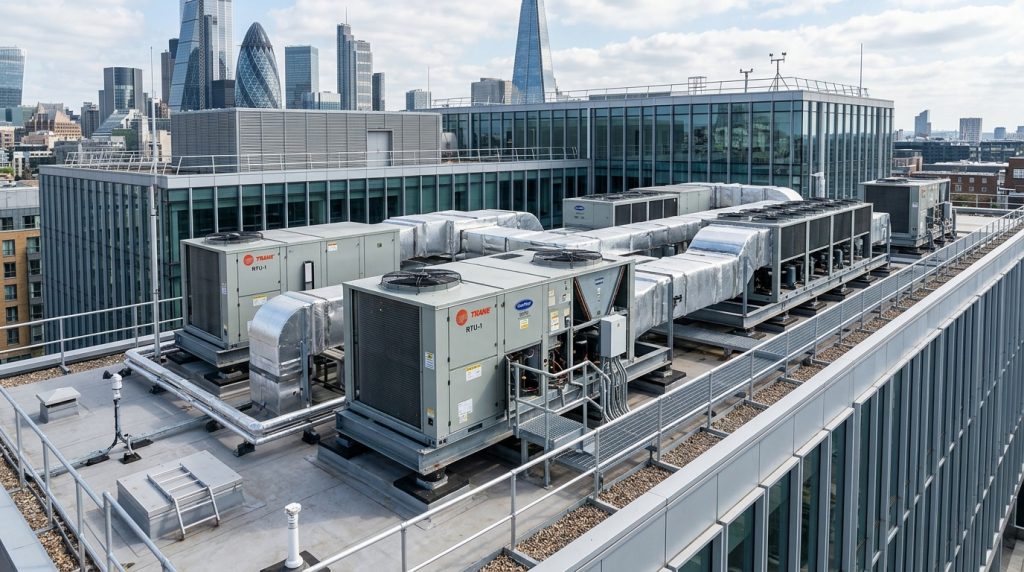
Commercial HVAC systems are designed to support larger buildings with greater occupancy levels, longer operating hours, and more demanding ventilation requirements.
Many businesses depend on professional commercial HVAC contractor services to design, install, maintain, and optimize these systems.
Commercial properties may include:
- Office buildings
- Retail stores
- Restaurants
- Warehouses
- Manufacturing facilities
- Schools
- Healthcare facilities
- Multi-tenant buildings
Because commercial buildings often have varying occupancy levels throughout the day, HVAC systems must adapt to changing demands while maintaining efficiency and comfort.
Common Commercial HVAC Equipment
Commercial HVAC systems often include:
- Rooftop units (RTUs)
- Commercial furnaces
- Large heat pump systems
- Chillers
- Boilers
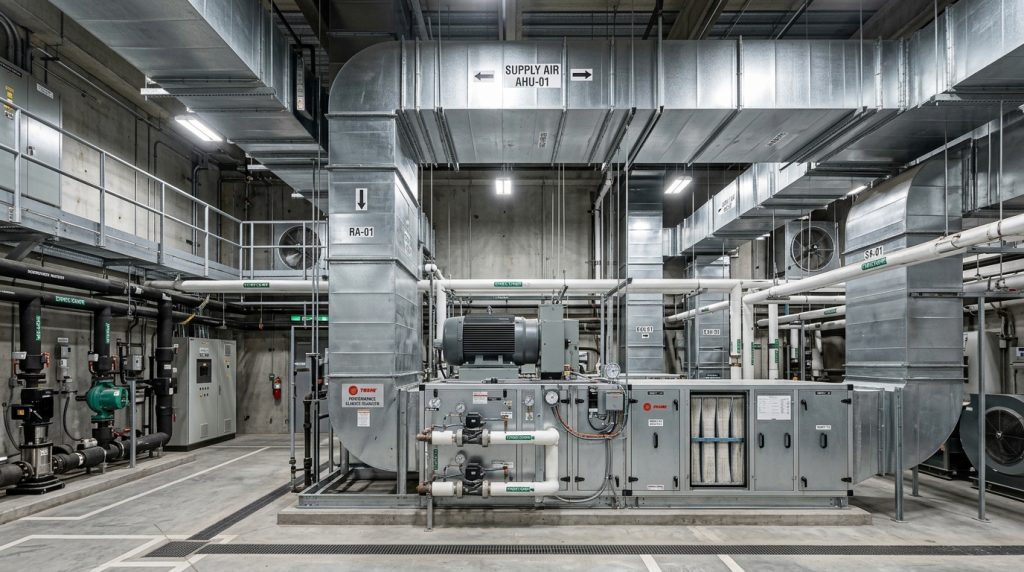
- Air handlers
- Variable refrigerant flow (VRF) systems
- Building automation systems
These systems are frequently designed to support multiple zones with different temperature requirements.
Commercial HVAC Priorities
Commercial building operators often prioritize:
- Operational reliability
- Energy efficiency
- Occupant comfort
- Regulatory compliance
- Indoor air quality
- Equipment redundancy
- Downtime reduction
- Lifecycle cost management
Because HVAC interruptions can affect productivity and business operations, reliability becomes especially important.
Key Differences Between Residential and Commercial HVAC Systems
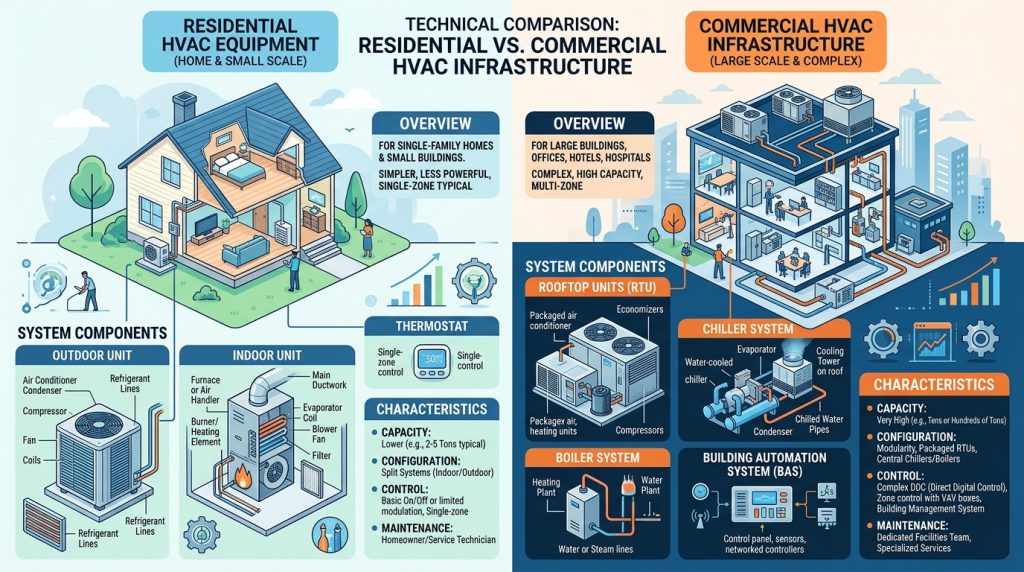
Although residential and commercial systems share similar objectives, several important differences distinguish the two.
System Size
Commercial systems are generally much larger than residential systems because they serve greater square footage and larger occupant populations.
A single-family home may require one furnace and one air conditioner, while a commercial building may utilize multiple rooftop units, air handlers, or central plant equipment.
System Complexity
Commercial systems often include:
- Multiple zones
- Advanced controls
- Building automation systems
- Dedicated ventilation equipment
- Specialized filtration systems
Residential systems are typically simpler to operate and maintain.
Ventilation Requirements
Commercial buildings often have stricter ventilation requirements due to occupancy levels and building codes.
Proper ventilation helps maintain:
- Indoor air quality
- Occupant comfort
- Regulatory compliance
- Moisture control
Many commercial facilities require significantly more outside air management than residential homes.
Maintenance Demands
Commercial systems often operate longer hours and serve larger populations, increasing wear and maintenance requirements.
As a result, preventative maintenance programs tend to be more extensive in commercial environments.
HVAC Installation Requirements
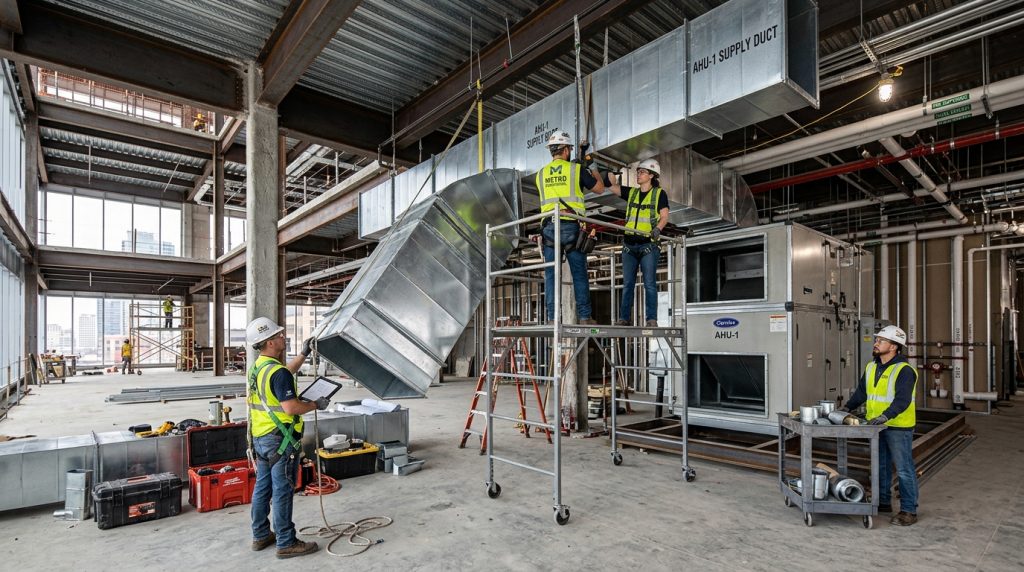
Installation procedures differ significantly between residential and commercial projects.
Residential installations often focus on:
- Equipment replacement
- Home comfort optimization
- Ductwork upgrades
- Energy-efficiency improvements
Commercial installations may involve:
- Mechanical engineering coordination
- Building automation integration
- Structural considerations
- Occupancy requirements
- Ventilation compliance
- Phased construction schedules
Because of these complexities, commercial projects frequently require larger teams and longer project timelines.
Energy Efficiency in Residential and Commercial HVAC Systems
Energy efficiency is a major concern for both homeowners and commercial property operators, but the strategies used to improve efficiency often differ significantly.
Residential property owners generally focus on reducing monthly utility bills and improving home comfort. Commercial building operators, however, often evaluate efficiency from a broader operational perspective that includes energy consumption, maintenance expenses, equipment lifespan, and overall building performance.
Modern HVAC systems have become increasingly efficient thanks to advances in equipment design, controls, airflow management, and system monitoring.
Many building owners evaluate ENERGY STAR certified HVAC equipment when planning equipment upgrades because these systems meet established efficiency standards.
Residential Energy Efficiency Strategies
Common residential efficiency improvements include:
- High-efficiency furnaces
- Heat pumps
- Smart thermostats
- Improved insulation
- Duct sealing
- Air filtration upgrades
- Preventative maintenance
Even relatively small improvements can reduce energy consumption over time.
Commercial Energy Efficiency Strategies
Commercial buildings often implement more advanced solutions, including:
- Building automation systems
- Variable-speed equipment
- Occupancy-based controls
- Energy monitoring platforms
- Zoned HVAC management
- Demand-controlled ventilation
These technologies help large facilities optimize performance while controlling operating costs.
The U.S. Department of Energy provides guidance on energy-efficient heating and cooling systems that can benefit both residential and commercial property owners.
Indoor Air Quality and Ventilation
Indoor air quality has become an increasingly important aspect of HVAC system design.
While homeowners often focus on comfort and allergens, commercial facilities may face additional concerns related to occupancy density, ventilation regulations, and workplace health requirements.
Modern HVAC systems help address:
- Dust
- Pollen
- Airborne particles
- Humidity issues
- Ventilation concerns
- Indoor contaminants
Both residential and commercial systems benefit from proper filtration and airflow management.
Residential Indoor Air Quality Goals
Homeowners often prioritize:
- Allergy reduction
- Dust control
- Humidity management
- Cleaner indoor air
- Improved comfort
Residential air quality improvements may include filtration upgrades, humidifiers, dehumidifiers, and ventilation enhancements.
Commercial Indoor Air Quality Goals
Commercial buildings often require more extensive air quality strategies due to larger occupant populations and longer operating hours.
Objectives frequently include:
- Ventilation compliance
- Occupant comfort
- Workplace productivity
- Airborne contaminant reduction
- Humidity control
Following recognized indoor air quality best practices can help improve building performance and occupant well-being.
Why Preventative Maintenance Matters
Regardless of building type, preventative maintenance remains one of the most effective ways to protect HVAC investments.
Both residential and commercial systems experience wear and tear over time. Without routine maintenance, efficiency often declines while repair risks increase.
Benefits of preventative maintenance include:
- Improved efficiency
- Reduced breakdowns
- Lower operating costs
- Extended equipment lifespan
- Better indoor air quality
- Improved comfort
Residential Maintenance Programs
Residential maintenance often focuses on:
- Filter replacement
- Furnace inspections
- Air conditioner tune-ups
- Thermostat calibration
- Safety inspections
Routine service helps homeowners avoid unexpected repairs while maintaining system performance.
Commercial Maintenance Programs
Commercial maintenance is typically more comprehensive.
Programs may include:
- Rooftop unit inspections
- Building automation testing
- Airflow verification
- Refrigerant monitoring
- Ventilation inspections
- Equipment performance analysis
Because HVAC failures can disrupt business operations, proactive maintenance becomes especially valuable in commercial settings.
Smart Controls and Building Automation
One of the largest differences between residential and commercial HVAC systems is the use of controls.
Residential systems often rely on:
- Programmable thermostats
- Smart thermostats
- Mobile applications
Commercial systems frequently utilize building automation systems capable of managing multiple zones, schedules, and equipment types simultaneously.
Benefits of Smart HVAC Controls
Smart controls can help:
- Reduce energy waste
- Improve comfort consistency
- Monitor system performance
- Optimize operating schedules
- Support preventative maintenance efforts
For large commercial facilities, advanced controls often become essential tools for energy management.
How to Choose the Right HVAC Contractor
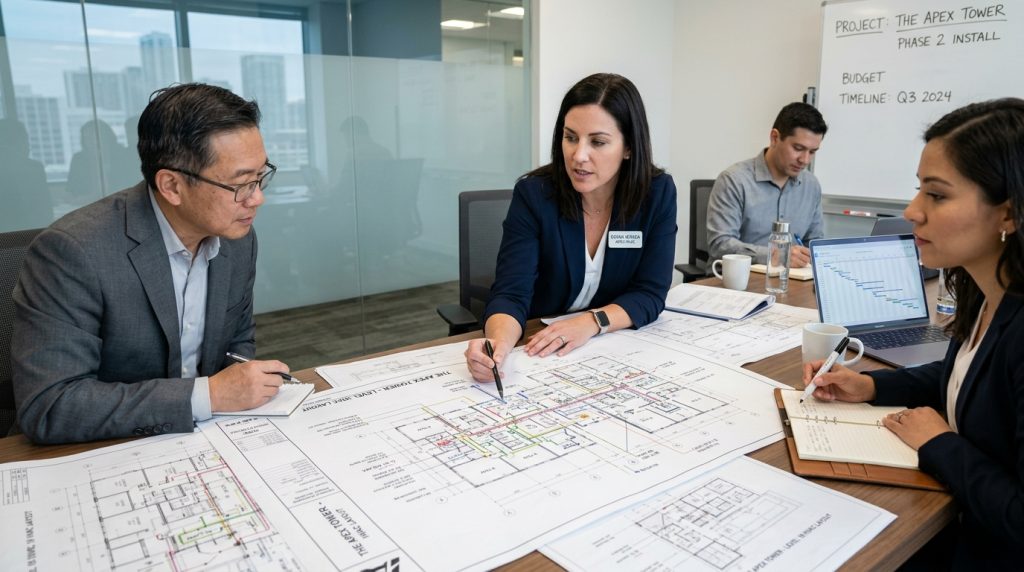
Selecting the right contractor can have a significant impact on installation quality, energy efficiency, equipment lifespan, and long-term operating costs.
While residential and commercial projects share some similarities, commercial projects often require additional expertise due to their complexity.
Property owners evaluating a commercial HVAC contractor should consider:
- Licensing
- Insurance
- Industry certifications
- Commercial project experience
- Maintenance capabilities
- Emergency service availability
- System design expertise
Similarly, homeowners seeking an HVAC installation service should evaluate installation practices, equipment recommendations, warranties, and customer support.
Questions to Ask Before Hiring
Important questions include:
- How will the system be sized?
- What efficiency options are available?
- What maintenance services are offered?
- What warranties are included?
- What experience exists with similar projects?
The answers often provide valuable insight into contractor capabilities.
Evaluating Customer Feedback
Many property owners also review public business profiles to better understand customer experiences, responsiveness, professionalism, and overall reputation before selecting an HVAC provider.
Customer feedback should complement—not replace—other evaluation criteria such as experience, certifications, and service offerings.
Residential vs Commercial HVAC Comparison
| Category | Residential HVAC | Commercial HVAC |
| Building Size | Smaller properties | Larger facilities |
| Equipment Scale | Smaller systems | Large-capacity systems |
| Controls | Single thermostat or limited zoning | Advanced automation and zoning |
| Maintenance Requirements | Moderate | Extensive |
| Ventilation Complexity | Lower | Higher |
| Installation Complexity | Moderate | High |
| Operating Hours | Limited | Extended |
| Energy Management | Basic to moderate | Advanced |
Conclusion
Residential and commercial HVAC systems share the same fundamental purpose: maintaining comfortable, healthy, and energy-efficient indoor environments. However, the equipment, controls, installation requirements, and maintenance strategies involved can vary dramatically between homes and commercial buildings.
Residential HVAC systems focus primarily on comfort, affordability, and energy efficiency for individual households. Commercial HVAC systems must address larger spaces, more complex ventilation requirements, multiple zones, extended operating schedules, and business continuity concerns.
Whether managing a home, office building, retail facility, restaurant, or industrial property, understanding the differences between residential and commercial HVAC systems can help property owners make informed decisions regarding installation, maintenance, upgrades, and contractor selection.
As HVAC technology continues to evolve, both residential and commercial property owners have increasing opportunities to improve efficiency, reduce operating costs, enhance indoor air quality, and create more comfortable indoor environments.
Frequently Asked Questions
What is the difference between residential and commercial HVAC systems?
Residential HVAC systems are designed for homes and smaller residential properties, while commercial HVAC systems serve larger buildings with more complex heating, cooling, ventilation, and zoning requirements.
Why are commercial HVAC systems more complex?
Commercial buildings often have larger floor plans, higher occupancy levels, longer operating hours, and stricter ventilation requirements. These factors require more sophisticated equipment and controls.
What services are included in commercial HVAC service?
Professional commercial HVAC service may include system design, installation, preventative maintenance, repairs, building automation support, ventilation improvements, and energy-efficiency upgrades.
How often should HVAC systems be serviced?
Most residential systems benefit from annual maintenance, while commercial systems often require multiple inspections throughout the year due to heavier usage and operational demands.
What is a commercial HVAC contractor?
A commercial HVAC contractor specializes in designing, installing, repairing, and maintaining HVAC systems for commercial buildings, industrial facilities, and large-scale properties.
Are commercial HVAC systems more energy efficient?
Commercial systems can be highly efficient when properly designed and maintained. Many facilities use advanced controls, zoning systems, and energy management technologies to reduce operating costs.
Why is ventilation important in commercial buildings?
Ventilation helps maintain indoor air quality, remove contaminants, control humidity, and support occupant comfort while meeting applicable building standards.
What is a rooftop HVAC unit?
A rooftop unit (RTU) is a self-contained commercial HVAC system installed on the roof of a building. RTUs are commonly used in offices, retail stores, restaurants, and commercial facilities.
How can businesses reduce HVAC operating costs?
Businesses can improve efficiency through preventative maintenance, building automation systems, high-efficiency equipment, ventilation optimization, and energy management strategies.
What should homeowners look for in an HVAC installation service?
When evaluating an HVAC installation service, homeowners should consider licensing, experience, certifications, warranties, installation practices, and ongoing maintenance support.
Does indoor air quality affect HVAC performance?
Yes. Poor filtration, ventilation issues, airflow restrictions, and excessive contaminants can reduce HVAC efficiency while negatively affecting comfort and equipment performance.
How do I choose the right HVAC contractor?
Property owners should evaluate licensing, insurance, certifications, customer reviews, installation experience, maintenance capabilities, and the contractor’s experience with similar projects.