

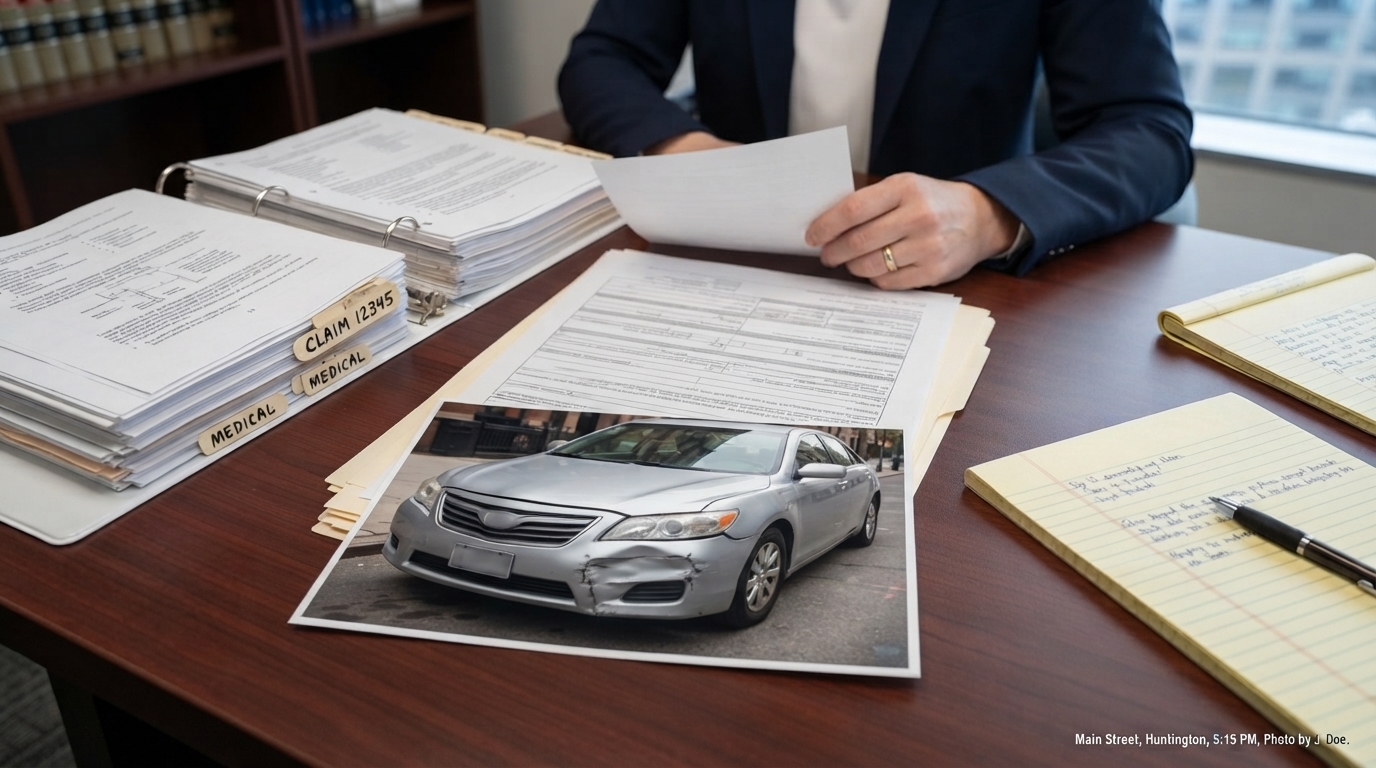
New York car accident claims can feel confusing because the first insurance claim is not always against the driver who caused the crash. In many injury cases, New York’s no-fault insurance system requires an injured person to first seek certain benefits through the applicable no-fault insurer. For people trying to understand legal options after a serious crash, a car accident lawyer New York resource can help explain how no-fault benefits, injury thresholds, and liability claims may interact.
Quick Answer
New York no-fault insurance generally provides certain first-party benefits after a motor vehicle accident, regardless of who caused the crash. These benefits may help cover medical expenses, lost earnings, and other reasonable accident-related costs. However, no-fault does not automatically cover every loss. A separate claim against an at-fault driver may be possible when the injured person meets New York’s serious injury threshold or when the case falls outside normal no-fault limits.
Key Takeaways
- New York no-fault insurance usually pays certain benefits regardless of fault.
- Written notice of a no-fault claim is generally required within 30 days after the accident.
- Medical bills are generally subject to strict submission timelines.
- A no-fault claim is different from a lawsuit against an at-fault driver.
- Pain and suffering claims often depend on whether the injury meets New York’s serious injury threshold.
- Insurance communication, medical documentation, and deadline tracking can strongly affect the claim.
What Is No-Fault Insurance in New York?
No-fault insurance is a system that allows certain people injured in motor vehicle accidents to seek first-party benefits through the applicable insurance coverage, no matter who caused the crash. In many New York car accident cases, the injured person does not start by proving the other driver was careless. Instead, the first step may be filing a no-fault application with the correct insurer.
No-fault benefits may apply to drivers, passengers, pedestrians, and cyclists injured in covered motor vehicle accidents. The specific insurer can depend on the person’s role in the accident, available household coverage, vehicle ownership, and other facts.
The purpose of no-fault is to help injured people access certain benefits quickly without waiting for a full liability dispute to be resolved. However, no-fault is not the same as full compensation for every injury-related loss. It has limits, rules, forms, and deadlines.
What Does No-Fault Insurance Usually Cover?
No-fault benefits may help pay for reasonable and necessary accident-related medical care. This can include emergency treatment, doctor visits, diagnostic testing, physical therapy, medication, and other covered medical expenses connected to the crash.
No-fault may also provide partial lost wage benefits when an injured person cannot work because of accident-related injuries. Other reasonable and necessary expenses may also be covered in certain circumstances.
The New York Department of Financial Services no-fault guidance explains that no-fault benefits are connected to basic economic loss. This means no-fault is mainly focused on certain financial losses, not every possible damage that may result from a crash.
What No-Fault Insurance Does Not Cover
No-fault insurance is helpful, but it is limited. It does not automatically pay for pain and suffering. It also may not fully cover long-term wage loss, future medical needs, permanent disability, emotional distress, reduced earning capacity, or other damages that go beyond basic no-fault benefits.
This is where serious injury claims become important. If an injured person meets the legal threshold for a serious injury, a separate claim against the at-fault driver may allow recovery for damages that no-fault does not cover.
For example, a person with a minor injury may rely mostly on no-fault benefits. A person with a fracture, surgery, permanent limitation, significant disability, or other qualifying injury may need to evaluate whether a liability claim is also available.
Why the 30-Day No-Fault Deadline Matters
One of the most important no-fault rules is the written notice deadline. The New York DFS guidance for filing claims under your own policy explains that an injured person should file written notice of claim as soon as reasonably practicable, but generally no later than 30 calendar days after the accident unless there is a clear and reasonable justification for delay.
This deadline can create problems for injured people who wait too long. Some people assume that calling the police, speaking to the other driver’s insurer, or getting medical treatment automatically starts the no-fault process. That is not always true. A written no-fault claim must usually be submitted to the correct insurer.
A late no-fault application does not always mean the case is impossible, but it can create a serious dispute. The injured person may need to explain why the delay was reasonable. Because of this, early insurance notice is one of the most important steps after a New York car accident.
Medical Bill Submission Rules Can Also Affect the Claim
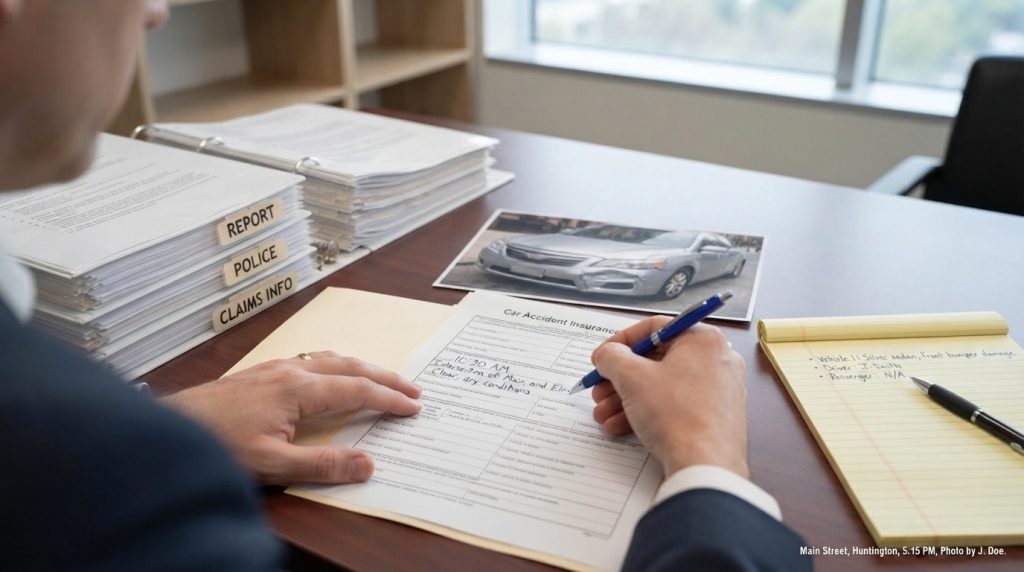
No-fault claims also involve medical bill submission rules. Medical providers generally need to submit bills within required timelines. If bills are late, the insurer may challenge payment.
This matters because accident victims often assume that receiving treatment is enough. In reality, the paperwork behind the treatment is also important. Doctors, imaging centers, physical therapists, hospitals, and other providers may need correct insurance information so bills are submitted to the proper no-fault carrier.
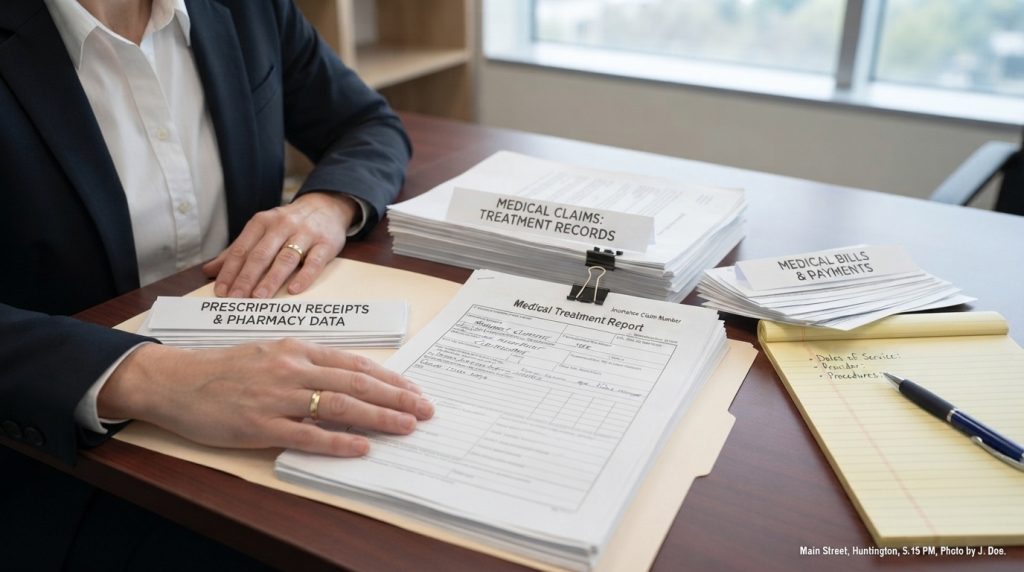
An injured person should keep copies of medical records, appointment summaries, prescriptions, diagnostic reports, referrals, and bills. These documents can help show the connection between the accident and the treatment.
How No-Fault and Fault Work Together
The term “no-fault” can be misleading. It does not mean fault never matters. It simply means certain first-party benefits may be available without proving fault at the beginning.
Fault can still matter in several ways. It may affect whether the injured person can bring a separate claim against another driver. It may affect property damage claims. It may also affect cases involving serious injuries, multiple vehicles, uninsured drivers, commercial vehicles, or disputed crash facts.
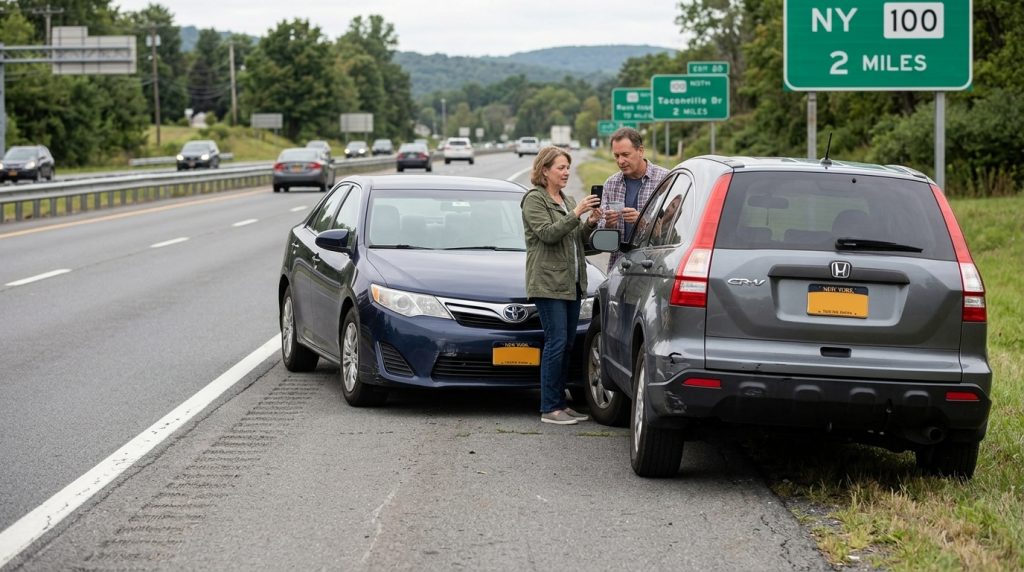
For example, a driver injured in a rear-end collision may file a no-fault claim for medical care and lost earnings. If the injuries are serious enough, that same person may also pursue a liability claim against the at-fault driver for pain and suffering and other damages not covered by no-fault.
What Is the Serious Injury Threshold?
New York’s serious injury threshold is one of the most important rules in car accident injury claims. Under New York Insurance Law § 5104, recovery for non-economic loss in certain covered motor vehicle cases is limited unless the injured person has suffered a serious injury or basic economic loss above the statutory threshold.
The definition of serious injury appears in New York Insurance Law § 5102. Categories may include death, dismemberment, significant disfigurement, fracture, loss of a fetus, permanent loss of use of a body organ or member, significant limitation, permanent consequential limitation, or a medically determined non-permanent injury that prevents normal daily activities for the required period.
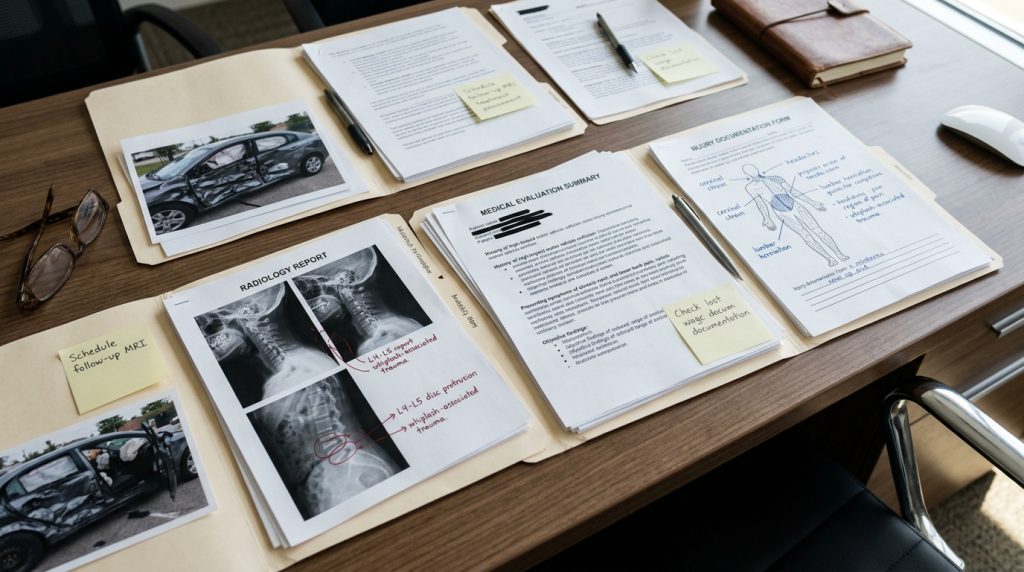
This is why medical documentation matters so much. A serious injury claim is not based only on pain complaints. It may require diagnostic imaging, specialist evaluations, treatment records, disability notes, surgical records, range-of-motion testing, and other proof.
How No-Fault Affects Pain and Suffering Claims
Pain and suffering damages are not usually paid through no-fault benefits. These damages are generally part of a separate liability claim against the at-fault party. However, that type of claim may depend on whether the injured person meets the serious injury threshold.
This distinction is important. An injured person may receive no-fault benefits for medical expenses but still be unable to recover pain and suffering unless the injury qualifies under New York law. On the other hand, a person with a serious injury may have both a no-fault claim and a separate injury claim against the responsible driver.
People researching how these rules connect may review a New York no-fault insurance system guide to better understand how benefits, lawsuits, and serious injury issues work together.
Common Injuries That May Raise Serious Injury Questions
Not every injury meets the serious injury threshold. However, some injuries are more likely to raise serious legal and medical questions.
Examples may include:
- Fractures
- Herniated discs
- Torn ligaments
- Traumatic brain injuries
- Surgery-related injuries
- Permanent range-of-motion loss
- Significant scarring or disfigurement
- Nerve damage
- Long-term back or neck injuries
- Injuries causing extended inability to work or perform normal daily activities
The key issue is not only the diagnosis. The claim may also depend on medical proof, treatment consistency, expert opinions, and how the injury affects daily life.
What Documents Are Needed for a No-Fault Claim?
A no-fault claim can involve several documents. Missing or incomplete paperwork can delay benefits or lead to disputes.
Important documents may include:
- No-fault application forms
- Police accident report
- DMV accident report, when required
- Medical records
- Medical bills
- Diagnostic imaging reports
- Proof of lost wages
- Employer verification
- Prescription receipts
- Transportation receipts for medical visits
- Insurance correspondence
- Photos of vehicle damage and injuries
- Doctor disability notes
The New York DMV accident report guidance explains that certain crashes involving injury, death, or property damage above the required amount must be reported within 10 days. This reporting process is separate from the no-fault claim, but both may matter after a crash.
Who Is the Correct No-Fault Insurer?
Finding the correct no-fault insurer can be simple in some cases and complicated in others. A driver may usually look to the insurance policy covering the vehicle they were operating. A passenger may look to the policy covering the vehicle they occupied. A pedestrian or cyclist may need a different analysis depending on household policies, vehicle ownership, and available coverage.
Complications may arise when:
- The vehicle was borrowed
- The driver was working
- The crash involved a rideshare vehicle
- The vehicle was uninsured
- The injured person was a pedestrian
- The injured person was a cyclist
- Multiple vehicles were involved
- The accident happened during employment
- The injured person did not own a vehicle
Because no-fault benefits depend on proper filing with the correct insurer, early identification of coverage is important.
How No-Fault Applies to Passengers
Passengers injured in New York crashes may be eligible for no-fault benefits even if they were not driving. A passenger’s no-fault claim may be connected to the insurance policy for the vehicle they occupied. If that coverage is unavailable, other insurance sources may need to be reviewed.
Passengers should still document the crash carefully. They should get the driver’s information, the other vehicle’s information, police report details, medical records, and insurance claim information. If injuries are serious, a passenger may also have a liability claim against one or more negligent drivers.
How No-Fault Applies to Pedestrians and Cyclists
Pedestrians and cyclists injured by motor vehicles may also have no-fault rights in many New York cases. This can surprise people because they were not inside a vehicle. However, no-fault coverage may still apply when a covered motor vehicle is involved.
These cases can be more complicated because the correct insurance policy may not be obvious immediately. A pedestrian hit by a vehicle may need coverage information from the vehicle owner, the driver, or another available source. A cyclist may face similar insurance and liability questions.
Can an Injured Person Sue After Receiving No-Fault Benefits?
Receiving no-fault benefits does not automatically prevent a separate claim against an at-fault driver. The issue is whether the injured person has a legally valid claim beyond no-fault benefits.
A lawsuit or third-party claim may be possible when the injury meets New York’s serious injury threshold or when economic loss exceeds the applicable no-fault limits. Liability evidence is also important. The injured person must generally show that another party caused or contributed to the crash.
A serious car accident claim may involve both systems at the same time: no-fault for certain benefits and a liability claim for damages that no-fault does not cover.
How Insurance Companies Review No-Fault Claims
Insurance companies review no-fault claims carefully. They may examine whether the claim was filed on time, whether the medical treatment is related to the accident, whether bills were submitted properly, and whether the treatment is medically necessary.
Insurers may also request independent medical examinations, additional verification, wage documentation, or other records. If the insurer disputes treatment, lost wage benefits, or claim timing, benefits may be delayed or denied.
This is one reason accident victims should keep organized records. Every form, letter, bill, email, denial, appointment note, and payment record may become useful if there is a dispute.
Common Mistakes That Can Hurt a No-Fault Claim
Many no-fault problems begin with paperwork, timing, or communication mistakes. These issues may not seem important immediately, but they can affect benefits later.
Common mistakes include:
- Waiting too long to file written notice
- Sending the claim to the wrong insurer
- Assuming the police report starts the no-fault claim
- Missing medical appointments
- Not telling doctors the injury came from the crash
- Failing to keep copies of medical records
- Ignoring insurer letters
- Missing independent medical examinations
- Giving inconsistent accident descriptions
- Settling a liability claim before understanding the full injury impact
Good documentation does not guarantee a certain result, but poor documentation can make a valid claim harder to prove.
When Legal Guidance May Be Useful
Legal guidance may be helpful when injuries are serious, the insurer denies benefits, the correct no-fault carrier is unclear, the crash involved multiple vehicles, or the injured person may have a claim beyond no-fault benefits.
It may also be useful when there are disputes about the serious injury threshold, treatment necessity, lost wages, fault, uninsured coverage, commercial vehicles, rideshare vehicles, or government-owned vehicles.
People comparing local resources may review a Farmingdale legal office location when researching Long Island car accident claim help. For direct inquiry options, a free consultation page can also help readers understand how to start a case review.

FAQs About New York No-Fault Insurance
Does no-fault mean the other driver’s fault does not matter?
No. No-fault means certain first-party benefits may be available without proving fault first. Fault can still matter for property damage, serious injury claims, pain and suffering, and lawsuits against an at-fault driver.
What is the no-fault deadline in New York?
Written notice of a no-fault claim is generally required within 30 calendar days after the accident unless there is a clear and reasonable justification for delay. Medical bill submission timelines may also apply, so paperwork should be handled quickly.
Does no-fault pay for pain and suffering?
No-fault generally does not pay for pain and suffering. Pain and suffering damages are usually part of a separate claim against an at-fault party, and that claim may depend on whether the injury meets New York’s serious injury threshold.
Can passengers file no-fault claims?
Yes, passengers injured in covered New York motor vehicle accidents may often seek no-fault benefits. The correct insurance policy can depend on the vehicle occupied, available coverage, and the facts of the accident.
Can a person sue after receiving no-fault benefits?
Yes, receiving no-fault benefits does not automatically prevent a lawsuit. A separate claim may be possible if the person suffered a serious injury or has losses beyond no-fault coverage, and another party was legally responsible for the crash.
Final Thoughts
New York’s no-fault system can help injured people access certain benefits after a crash, but it does not replace every possible claim. Deadlines, medical documentation, insurance forms, serious injury rules, and liability evidence all matter. After a serious car accident, the strongest approach is to document the crash, seek medical care, file required notices on time, and preserve all insurance and treatment records.