

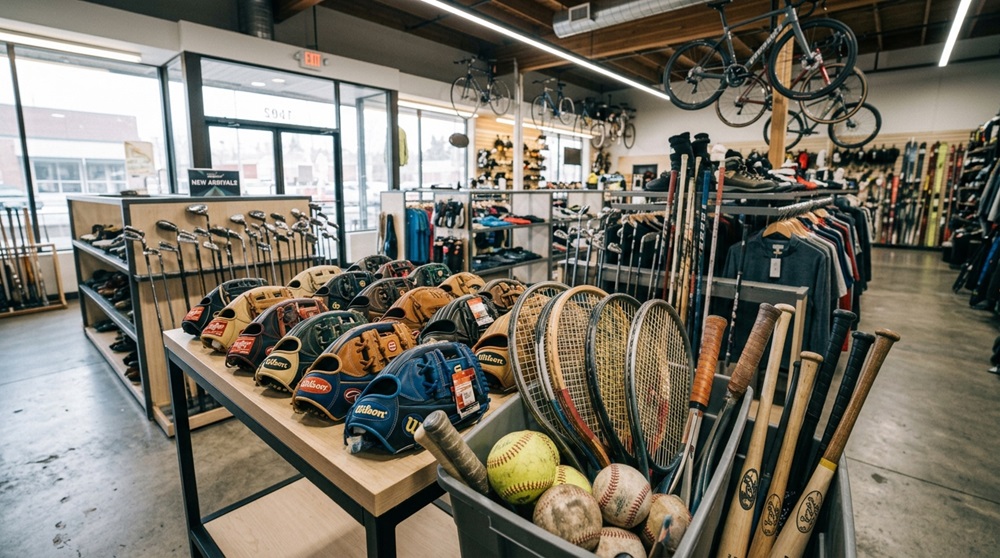
If you’ve ever searched for used sporting stores near me and ended up with a list of generic results that told you nothing about what’s actually on the shelves, you’re not alone.
Most store listings online are outdated, incomplete, or just show a phone number and an address. Finding the specific gear you need takes a bit more effort than a quick search, but there are reliable ways to do it.
Here’s how to track down exactly what you’re looking for.
Start with the right search filters
A plain Google search gets you a list. Filters get you closer to what you need.
When you search, try adding the specific gear type to your query. “Used ski boots near me” or “used cycling helmets [your city]” will return more useful results than a broad search for used sports stores. Google’s local filters let you sort by distance, hours, and ratings, which helps you avoid wasting a trip.
On Google Maps, you can:
- Filter by “Open now” to avoid closed locations
- Read the Q&A section on each listing (sometimes customers have already asked if the store carries specific gear)
- Check photos uploaded by customers, not just the store, since they often show actual shelves and inventory
Yelp can also be useful here. The reviews on Yelp tend to be more detailed than Google, and people often mention specific items they found or couldn’t find. Search the reviews for the gear type you want before you call.
Facebook Marketplace and local Facebook groups are worth checking too. Many used sporting goods dealers post individual items there even if they don’t update their website.
Call ahead. Seriously.
This saves you more time than any search filter.
Most used sporting goods stores don’t update their inventory online in real time. A store might have exactly what you need on the shelf right now, but you’d never know it from their website. A 2-minute phone call changes that.
When you call, be specific:
- Name the item exactly (brand and size if you know it)
- Ask if they expect more inventory coming in, since many stores restock on specific days
- Ask if they can hold it for you if they have it in stock
Some stores will put your name on items or call you when something comes in. You won’t know unless you ask.
What most stores don’t list online
This is where a lot of people give up too early.
Used sporting goods stores get new inventory constantly, often from estate sales, trade-ins, or bulk donations. That inventory rarely makes it to a website or social media post before it sells. Here’s what tends to stay invisible online:
- Single items and odd sizes. If a store gets one pair of ski boots in a size 9.5, it’s probably not worth creating a listing for.
- Recently dropped off gear. Trade-in items sometimes sit in a back room for days before anyone tags or photographs them.
- Seasonal gear that’s off-cycle. A store might have snowboard equipment in July that they haven’t bothered to photograph yet.
Calling or stopping in regularly is the only real way to catch this inventory. Some stores will take your number and reach out when something specific comes in.
Use resale platforms to fill the gaps
If local stores don’t have what you need, online resale platforms for sporting gear are worth checking.
Sites like Geartrade carry a wide range of used outdoor and sporting gear from sellers across the country, and you can filter by category, size, brand, and condition.
The search is a lot more specific than what you get from a store’s website, and the inventory updates regularly.
It’s a good option when you know exactly what you want and local stores keep coming up empty.
Tips for getting better results in person
If you’re going to visit a store, a few things make the trip more productive:
- Go early in the week. Many stores sort through new donations on weekends, so Monday and Tuesday often have fresher inventory.
- Ask about trade-in days. Some stores have specific days when they accept gear, which means new inventory arrives on a predictable schedule.
- Tell the staff what you’re looking for. Employees often know what’s in the back before it hits the floor.
- Check the clearance section. Older inventory that didn’t sell gets moved there, and it’s sometimes exactly what you need at a lower price.
FAQ
How do I know if a used sporting goods store has quality gear?
Check reviews for mentions of condition and pricing. When you’re in the store, look at how items are displayed and tagged. Stores that inspect and price gear carefully tend to have better quality overall. If tags include condition notes, that’s a good sign.
Are used sporting goods stores worth it for safety gear like helmets?
It depends on the item. Helmets have a lifespan and can be compromised after a hard impact without showing visible damage. For helmets, it’s generally better to buy new or buy from someone who can verify the history. For other gear like pads, bags, and apparel, used is fine.
Can I sell or trade in my old gear at most used sporting goods stores?
Many stores accept trade-ins, but the policies vary. Some pay cash, others give store credit, and some only accept certain6 categories of gear. Call ahead to ask about their trade-in process before you make the trip.
What’s the difference between a used sporting goods store and a consignment shop?
A used sporting goods store buys inventory outright and resells it. A consignment shop sells gear on behalf of the original owner and takes a percentage when it sells. Prices and selection differ between the two models, so it’s worth knowing which type you’re visiting.
How do I find used gear for niche sports?
General used sporting stores often skip niche sports entirely. Your best options are sport-specific forums, Facebook groups, and online resale platforms that specialize in outdoor or sporting gear. Searching by sport type on those platforms usually returns more relevant results than a local store visit.
Is it worth checking thrift stores for sporting gear?
Sometimes. Thrift stores like Goodwill occasionally get sporting equipment donated, but the selection is unpredictable and staff usually can’t answer questions about condition or fit. It’s worth a look if you’re nearby, but don’t make a special trip.