


Healthcare organizations need uniforms that support daily clinical work while maintaining a consistent professional appearance. Hospitals, physician offices, dental practices, veterinary clinics, and outpatient facilities often have employees with different body types, responsibilities, and clothing preferences. Selecting one coordinated scrub collection can simplify uniform management, but comfort and fit must remain priorities.
Med Couture Insight scrubs offer a practical option for healthcare teams seeking lightweight fabric, mechanical stretch, modern styling, and coordinated men’s and women’s uniforms. The collection includes scrub tops, straight-leg pants, joggers, and jackets, with different pocket arrangements and sizing options.
For organizations developing a uniform program, the important question is not simply whether a collection looks professional. It is whether the selected garments accommodate staff needs, remain easy to maintain, and can be ordered consistently as the team changes.
Quick Answer
Med Couture Insight can be a suitable collection for healthcare group uniforms because it combines soft, 100% polyester performance fabric, mechanical stretch, moisture-wicking properties, and coordinated styles for men and women.
Its combination of practical features and multiple garment options can help organizations maintain a consistent appearance without requiring every employee to wear the same cut.
Before selecting Insight for a team uniform program, managers should confirm:
- Approved scrub colors
- Women’s and men’s garment availability
- Individual staff sizes
- Petite, regular, tall, and short inseam needs
- Preferred scrub top styles
- Straight-leg or jogger pant requirements
- Pocket configurations
- Fabric comfort during clinical movement
- Embroidery placement
- Budget and purchasing arrangements
- Garment care requirements
- Future reorder availability
A successful uniform program balances organizational consistency with employee comfort, practical storage, and reliable sizing.
What Makes Med Couture Insight Suitable for Group Uniforms?
Insight is designed around functional healthcare workwear rather than highly specialized fashion styling.
Its polyester performance fabric provides a soft feel, mechanical stretch, and moisture management. The collection also includes several classic and contemporary silhouettes, allowing staff to choose garments based on their daily responsibilities.
For group uniform planning, these features offer several practical advantages.
Consistent Fabric Performance
Using a common scrub collection can reduce variation in fabric feel, garment appearance, and general care expectations across a team.
Staff members may select different approved styles while still wearing garments built around the same core textile.
This can be useful for clinics that want a coordinated appearance without forcing every employee into an identical fit.
Men’s and Women’s Style Options
A group uniform program should account for employees with different sizing and fit needs.
Insight includes women’s scrub styles and men’s RothWear Insight options, providing organizations with a broader selection of coordinated garments.
Practical Everyday Designs
The collection includes different necklines, pocket arrangements, pant silhouettes, and outer layers.
These options can accommodate employees who perform different tasks while maintaining an organized team appearance.
Straightforward Maintenance
Healthcare uniforms may require frequent laundering.
Insight’s polyester construction and easy-care characteristics can simplify weekly uniform maintenance when garments are washed according to their care labels and workplace requirements.
Understanding Insight Motion Fabric
Fabric choice is one of the most important decisions in group uniform planning.
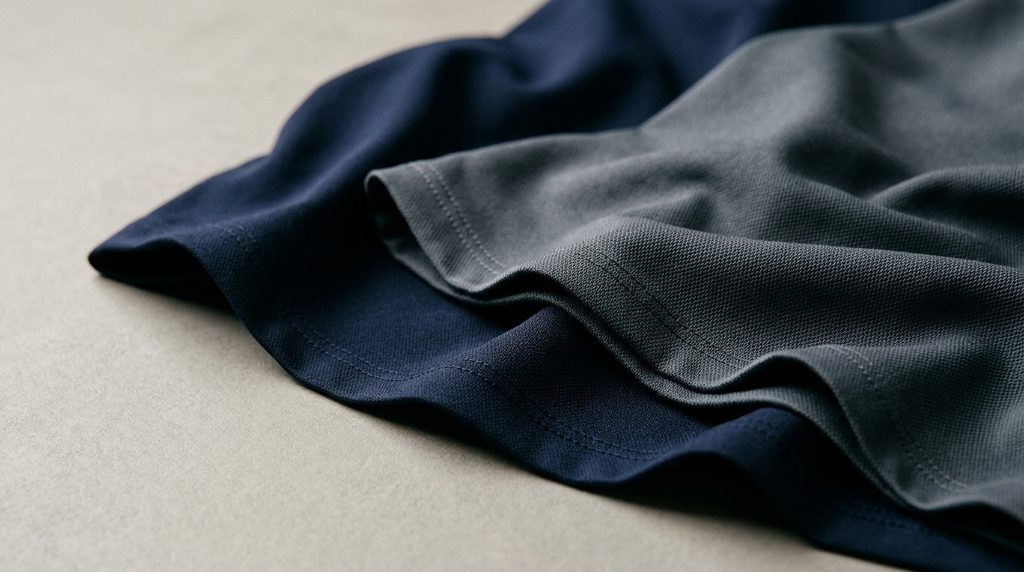
A collection may look coordinated in photographs, but the material must also feel comfortable during normal clinical movement.
Insight’s core garments use 100% polyester performance fabric with mechanical stretch.
The material is designed to provide softness, flexibility, moisture management, and a lightweight feel.
What Is Mechanical Stretch?
Mechanical stretch comes from the construction of the fabric rather than relying on a high percentage of elastic fibers such as spandex.
The fabric can flex during ordinary movements, allowing healthcare professionals to reach, walk, bend, and sit with greater ease than a rigid garment.
However, mechanical stretch does not guarantee comfort if the uniform is incorrectly sized.
Shoulder width, top length, pant rise, and hip measurements remain important.
Moisture-Wicking Performance
Insight fabric is designed to help move moisture through the textile so it can evaporate more readily.
This may be useful for employees who spend substantial time moving between patient rooms, treatment areas, workstations, and supply spaces.
Moisture management should not be confused with guaranteed cooling. Workplace temperature, layering, personal preferences, and garment fit also affect comfort.
Softness and Fabric Drape
The collection’s fabric is designed to feel soft rather than excessively stiff.
This can be valuable for healthcare employees who wear scrubs through extended workdays.
A comfortable drape also helps uniforms maintain a professional appearance without unnecessary bulk.
Durability for Repeated Wear
Polyester is commonly used in workwear because it can provide practical durability, wrinkle resistance, and shape retention.
The actual lifespan of Insight garments depends on wear frequency, laundering, garment construction, and workplace conditions.
Organizations should evaluate both fabric quality and replacement availability when choosing uniforms for long-term use.
Insight Scrub Tops for Different Healthcare Roles
Not every healthcare employee needs the same scrub top.
A nurse may prefer several pockets, while a provider wearing a lab coat may prefer a simpler silhouette.
Insight includes different designs that can help organizations accommodate these preferences.
Three-Pocket V-Neck Tops
The Insight MC2411 women’s three-pocket scrub top provides additional storage for employees who need convenient access to small workplace items.
This style may appeal to:
- Nurses
- Medical assistants
- Dental assistants
- Veterinary technicians
- Clinical support employees
Workers should evaluate whether the pockets remain comfortable when filled and whether the top maintains appropriate coverage during movement.
One-Pocket Tuck-In Tops
The Insight MC2432 women’s one-pocket tuck-in top provides a more streamlined option.
This may appeal to healthcare professionals who prefer a cleaner appearance or carry most of their supplies in scrub pants or a lab coat.
Tuckable tops can also help organizations create a polished uniform standard for selected roles.
Side-Pocket Tops
The Insight MC2468 side-pocket top offers another configuration for employees who prefer lower pocket placement.
Pocket position can influence convenience, particularly for workers who alternate between sitting and standing.
Men’s RothWear Insight Tops
RothWear Insight includes men’s styles such as the one-pocket MC2478 and three-pocket MC2486 tops.
These options provide alternative storage configurations and men’s-specific fits within the wider Insight family.
The correct style should be selected according to actual work needs rather than assuming every employee requires maximum pocket capacity.
Choosing Insight Scrub Pants for Group Orders
Pant fit can become a major challenge when ordering uniforms for multiple employees.

Even when staff members wear the same top color, their preferred waistbands, inseams, and leg styles may differ considerably.
A practical group uniform program should allow appropriate choices while maintaining consistent colors.
Women’s Straight-Leg Pants
The Insight MC2702 women’s pant provides a more traditional leg silhouette with practical storage.
Straight-leg pants may appeal to employees who prefer a familiar appearance rather than a tapered jogger.
Key fit considerations include:
- Waistband comfort
- Pant rise
- Hip and thigh measurements
- Inseam length
- Pocket access
- Comfort while sitting
Women’s Jogger Pants
The Insight MC2711 jogger offers a contemporary alternative with ankle cuffs.
Joggers may appeal to employees who prefer a more tapered silhouette or want hems that do not hang loosely around their footwear.
However, some healthcare employers restrict jogger-style uniforms.
Managers should confirm the organization’s dress code before approving them.
Men’s Straight-Leg Pants
The RothWear Insight MC2772 straight-leg pant provides an option for employees who prefer a traditional leg shape.
The correct inseam and waistband fit should be confirmed before ordering multiple sets.
Men’s Jogger Pants
The RothWear Insight MC2765 jogger adds another silhouette for men’s uniforms.
This can help organizations provide fit flexibility while maintaining a consistent overall appearance.
Style Selection Table
| Staff preference | Insight style to consider | Main consideration |
| More storage in a women’s top | MC2411 three-pocket top | Pocket placement and capacity |
| Streamlined women’s top | MC2432 tuck-in top | Coverage and comfortable tucking |
| Alternative pocket placement | MC2468 side-pocket top | Accessibility during work |
| Women’s classic pant | MC2702 | Rise and inseam |
| Women’s tapered jogger | MC2711 | Cuff comfort and dress code |
| Men’s traditional top | MC2486 three-pocket top | Chest fit and storage |
| Men’s classic pant | MC2772 | Waist and leg length |
| Men’s jogger | MC2765 | Ankle cuffs and movement |
Style availability can change, so managers should confirm exact color, size, and stock availability before approving a group order.
How Group Uniforms Improve Team Consistency
A coordinated uniform program can help healthcare organizations establish a professional, recognizable team appearance.
Consistency does not necessarily mean identical garments.
Instead, organizations can define a limited range of approved styles, colors, and embroidery arrangements.
Create a Clear Appearance Standard
A practical uniform guide should identify:
- Approved scrub collection
- Approved colors
- Allowed top styles
- Allowed pant styles
- Jacket requirements
- Embroidery placement
- Name and credential format
- Replacement procedures
These standards help employees understand what is permitted.
Allow Different Fits Within One Color Scheme
Requiring every employee to wear the same silhouette may create unnecessary fit problems.
For example, one nurse may prefer joggers, while another may find straight-leg pants more comfortable.
If both styles meet workplace requirements, allowing these choices can improve staff comfort without compromising visual consistency.
Use Embroidery for Identification
Embroidery can help standardize professional names, clinic logos, or departmental identifiers.
Before customization, organizations should confirm spelling, credentials, placement, and garment sizing.
Incorrect embroidery can be difficult or expensive to correct after production.
Planning Insight Scrub Colors for a Healthcare Team
Uniform color is often one of the first decisions made by clinic managers.
However, selecting a color based only on appearance can lead to problems if the shade is unavailable across required sizes or styles.
Start With the Dress Code
Some organizations use a single color for all clinical employees.
Others use different colors to identify departments or responsibilities.
A color system should remain simple enough for staff and administrators to follow.
Check Availability Across Styles
A color may be available in one scrub top but not in every pant or jacket.
Managers should confirm coordinated availability for:
- Women’s tops
- Women’s pants
- Men’s tops
- Men’s pants
- Warm-up jackets
- Required inseam options
Common Insight colors have included black, navy, ceil, pewter, royal, and wine, but availability varies by style and retailer.
Test Embroidery Contrast
Logo thread should remain readable against the selected scrub color.
Dark uniforms may require lighter thread, while lighter colors may work better with darker embroidery.
A sample proof helps verify the intended appearance.
Staff Sizing Is the Most Important Ordering Step
Group scrub orders can become expensive when sizing is estimated rather than confirmed.
Different employees may have different preferences even when their body measurements are similar.
Collect Individual Measurements
A sizing form should request:
- Employee name
- Department
- Preferred scrub top style
- Chest or bust measurement
- Waist measurement
- Hip measurement
- Top size
- Pant size
- Inseam
- Jacket size, if required
- Embroidery details
Staff should refer to the size chart for the exact garment.
Consider Petite and Tall Options
Selected Insight pants are offered in different lengths, but availability varies.
A person who needs a petite inseam may not be comfortable wearing regular-length pants, even if the waistband and hips fit correctly.
Similarly, tall employees may require additional length to maintain appropriate coverage.
Use Try-On Samples When Possible
A fitting session can help employees confirm sizes before garments are embroidered.
During a fitting, workers should:
- Sit to assess waistband comfort.
- Reach forward to test shoulder movement.
- Bend to check coverage.
- Walk to assess pant length.
- Check pocket accessibility.
- Try the garment with approved shoes and layers.
A short fitting process can prevent a larger group order from containing multiple sizing mistakes.
Med Couture Insight for Nursing Teams
Nurses often work in environments that involve prolonged standing, frequent walking, patient interaction, and repeated movement.
Insight’s lightweight polyester fabric and mechanical stretch may appeal to nurses who value everyday flexibility.
For nursing teams, useful considerations include:
- Comfortable shoulder movement
- Appropriate pant rise
- Functional pockets
- Lightweight fabric
- Secure waistbands
- Consistent approved colors
- Replacement availability
NIOSH provides information about prolonged standing at work, including associated discomfort and fatigue.
Although uniforms cannot eliminate the physical demands of nursing, appropriately fitted clothing can help avoid additional restriction or pressure during shifts.
Insight for Dental Offices
Dental assistants and hygienists frequently work while seated and make repeated upper-body movements.
Comfortable shoulder construction and waistbands are particularly important.
Insight may be suitable for dental teams seeking coordinated uniforms with flexible movement and practical styling.
Before ordering, dental offices should evaluate:
- Seated comfort
- Shoulder mobility
- Pocket placement
- Fabric feel
- Approved colors
- Jacket compatibility
- Ease of laundering
A dental uniform program should account for front-office and clinical employees who may have different work responsibilities.
Insight for Medical Assistants and Outpatient Clinics
Medical assistants often alternate between preparing exam rooms, assisting providers, organizing supplies, and completing administrative tasks.
A uniform should support both seated work and frequent movement.
Insight’s modern styling and different pocket configurations can provide options for these varied responsibilities.
A clinic may approve one-pocket tops for selected patient-facing roles while allowing multi-pocket tops for employees who need additional storage.
Coordinating the color and embroidery can maintain consistency across both styles.
Insight for Veterinary Teams
Veterinary professionals may perform active tasks involving animals, equipment, cleaning, and treatment preparation.
They often need comfortable movement, functional storage, and easy-care materials.
Insight’s lightweight fabric and mechanical stretch may appeal to veterinary employees, although workers should evaluate how the material handles hair, lint, and repeated laundering.
Useful considerations include:
- Pocket security
- Ease of cleaning
- Comfortable bending
- Fabric durability
- Pant length
- Replacement frequency
- Approved workplace colors
The best veterinary scrub collection should be chosen according to the team’s actual responsibilities.
Group Embroidery: What to Confirm Before Production
Custom embroidery can improve the consistency of healthcare team uniforms, but it adds decisions that should be finalized before ordering.
An embroidery checklist should include:
- Correct organization logo
- Approved logo file
- Thread color
- Logo dimensions
- Placement on the garment
- Employee name format
- Credentials, if required
- Spelling confirmation
- Final proof approval
Confirm Placement on Different Top Styles
A three-pocket V-neck top may offer different embroidery space than a one-pocket tuck-in top.
Managers should not assume that the same placement will work equally well across all garments.
The embroidery provider should review each selected style before production.
Check Return and Exchange Rules
Customized clothing may have limited return options.
Sizes, colors, and embroidery details should be verified before the final order is released.
Building a Practical Group Ordering Process
A well-organized purchasing process reduces administrative work and helps employees receive the correct uniforms.
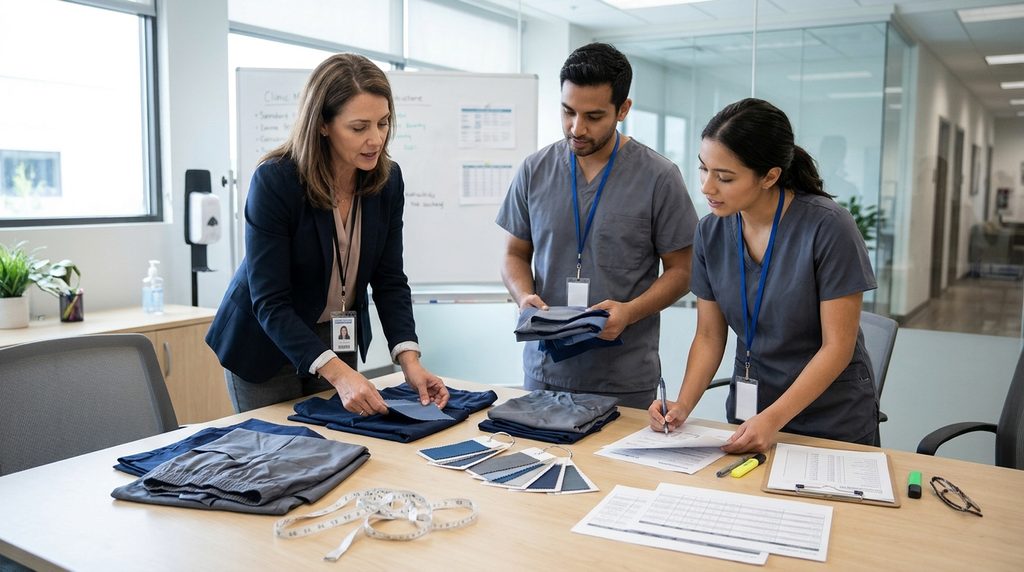
For organizations arranging group scrub ordering, a clear workflow can make a substantial difference.
Step 1: Define the Uniform Policy
Choose approved colors, garment styles, embroidery, and employee allowances.
Step 2: Confirm Collection Availability
Check whether the required Insight tops, pants, jackets, and sizes can be sourced.
Because product assortments change, availability should be verified before the team commits to a particular style.
Step 3: Collect Staff Sizes
Use one standardized size form for the entire team.
Allow employees to select from approved cuts when appropriate.
Step 4: Approve Samples
Review fabric, fit, colors, and embroidery placement.
Testing garments before ordering can reduce errors.
Step 5: Finalize the Budget
Calculate garment costs, embroidery, shipping, replacements, and any additional layers.
Step 6: Confirm the Delivery Schedule
Allow enough time for order processing, customization, and employee distribution.
Step 7: Maintain a Reorder Record
Keep approved style numbers, colors, sizes, and embroidery information in one place.
This simplifies future purchases.
How Many Scrub Sets Should a Clinic Provide?
The number of scrub sets required depends on employee schedules and the organization’s uniform policy.
For employees working several days per week, one clean set per scheduled shift between laundering sessions plus a spare may be practical.
A clinic may choose to provide a fixed allowance rather than supplying every garment directly.
For example:
| Work schedule | Illustrative wardrobe planning |
| 1–2 shifts weekly | 2–3 sets |
| 3 shifts weekly | 4–5 sets |
| 4 shifts weekly | 5–6 sets |
| 5 shifts weekly | 6–7 sets |
These are planning examples, not mandatory healthcare standards.
The appropriate quantity depends on facility laundering requirements, employee schedules, and whether employer-provided uniforms are used.
Laundering and Infection-Control Requirements
Healthcare organizations should make sure their uniform program supports workplace laundering policies.
Insight’s polyester fabric offers everyday maintenance advantages, but it should still be handled according to garment care instructions.
The CDC’s Standard Precautions guidance explains infection-prevention practices used during patient care.
OSHA also provides information about healthcare workplace safety.
Ordinary scrubs, including those with moisture-wicking or stretch properties, are not substitutes for protective gowns or other required personal protective equipment.
Managers should distinguish between uniforms and protective garments when developing workplace policies.
Planning for New Hires and Staff Replacements
A uniform program needs to function beyond the first group purchase.
New employees, promotions, size changes, and garment damage create ongoing ordering needs.
Organizations should maintain:
- Approved garment styles
- Approved colors
- Size information
- Embroidery details
- Department rules
- Reorder contacts
- Replacement guidelines
- Purchasing arrangements
- New-hire ordering instructions
A documented process helps preserve consistency as the team grows.
Review Style Availability Periodically
A healthcare organization should avoid relying indefinitely on a garment without checking its current availability.
Collections, colors, and sizes may change over time.
Maintaining approved alternatives can help prevent disruptions if a particular style is discontinued or temporarily unavailable.
When Local Fit Support Is Useful
Group uniform planning can benefit from in-person sizing support, particularly when employees are unfamiliar with a collection.
Trying sample garments allows staff to compare fit, pant lengths, fabric feel, and pocket placement.
Healthcare teams can review a local medical scrub store profile when considering an in-person fitting.
A coordinated fitting session can help:
- Confirm staff sizes
- Identify inseam requirements
- Evaluate different top styles
- Check jacket fit
- Review embroidery placement
- Reduce order corrections
- Improve employee comfort
In-person support may be especially useful before a large customized order.
Common Mistakes in Healthcare Group Uniform Orders
Choosing One Style for Every Employee
A single garment cut may not accommodate all staff comfortably.
Allowing approved alternatives can improve fit while maintaining consistency.
Ignoring Inseam Requirements
Petite, regular, tall, and short lengths should be considered before ordering pants.
Approving Colors Without Checking Stock
Not every color is available in every garment or size.
Embroidering Before Confirming Fit
Customized garments may not be returnable.
Staff sizing should be verified before production.
Ordering Without a Replacement Plan
A uniform program should account for new hires and garment replacements.
Choosing Appearance Over Comfort
Professional styling is valuable, but employees also need clothing that supports normal clinical movement.
Forgetting Workplace Laundering Rules
Uniform maintenance must align with employer requirements and appropriate infection-control practices.
Group Uniform Planning Checklist
Before selecting Insight for a healthcare team, confirm:
- Approved collection and garment styles
- Required uniform colors
- Men’s and women’s size availability
- Petite, regular, tall, and short inseam needs
- Appropriate scrub top styles
- Pant preferences
- Pocket requirements
- Jacket options
- Embroidery placement
- Name and credential formatting
- Staff size forms
- Try-on opportunities
- Budget
- Delivery expectations
- Laundering requirements
- Reorder procedures
- Replacement options
This checklist creates a practical foundation for long-term uniform consistency.
FAQs
Are Med Couture Insight scrubs suitable for group uniforms?
Yes. Insight offers coordinated men’s and women’s styles, lightweight polyester fabric, mechanical stretch, and practical garment options. These features can support healthcare group uniform programs when required sizes, colors, and styles are available.
What fabric is used in Med Couture Insight scrubs?
Core Insight garments use 100% polyester performance fabric with mechanical stretch. The fabric is designed to provide softness, moisture management, flexibility, and easy-care characteristics. Exact garment specifications should be checked before purchase.
Can healthcare teams choose different Insight scrub styles?
Yes. A healthcare organization can approve different Insight tops and pants within a consistent color scheme. This allows employees to select styles based on fit, pocket needs, and personal preferences while maintaining an organized appearance.
Are Insight scrubs available for men and women?
Yes. Insight includes women’s scrub tops, pants, and jackets, along with coordinated men’s RothWear Insight styles. Size, color, and inseam availability differ by garment and should be confirmed before a group order.
Can Med Couture Insight scrubs be embroidered?
Insight scrub tops may be suitable for custom embroidery, depending on the garment design and embroidery placement. Organizations should review logo proofs, name formatting, sizing, and return policies before customization.
Conclusion
Med Couture Insight offers a practical combination of soft polyester performance fabric, mechanical stretch, lightweight comfort, and coordinated healthcare styling.
Its selection of women’s and men’s scrub tops, pants, joggers, and layering garments can help organizations maintain a consistent uniform program while accommodating different employee preferences.
Successful group uniform planning requires more than selecting a color or collection. Healthcare teams should establish approved styles, verify sizing, review embroidery, follow laundering policies, and prepare for future reorders.
With these steps in place, Insight can provide a useful foundation for a coordinated, professional, and comfortable healthcare uniform program.