

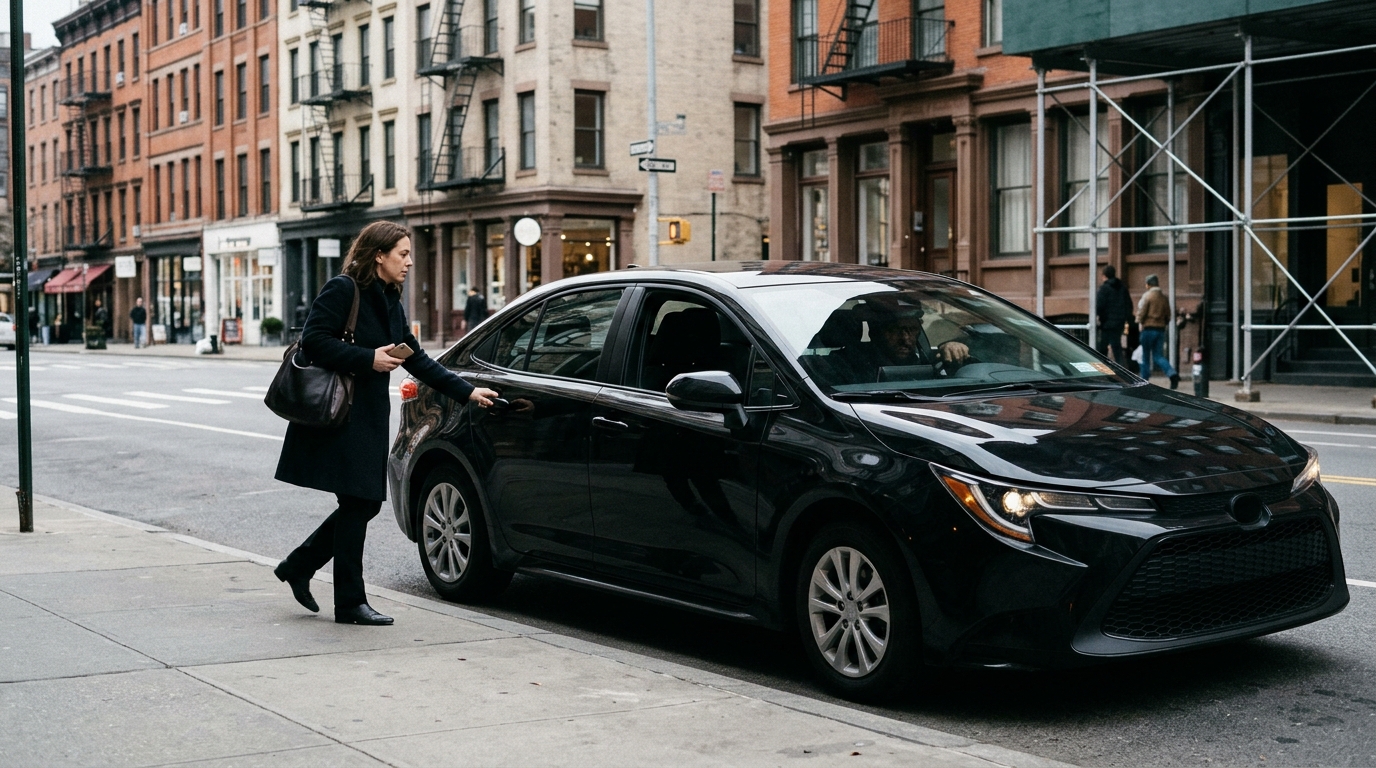
Uber and Lyft accident claims in New York depend on who caused the collision, whether the rideshare driver was actively using the app, and which insurance rules apply. Injured passengers, rideshare drivers, pedestrians, and other motorists may be eligible for compensation, but determining available coverage can be more complicated than in an ordinary car accident.
New York has specific insurance requirements for transportation network companies, while New York City operates under a separate regulatory framework. Understanding these distinctions helps injured individuals identify potentially responsible parties, preserve evidence, and pursue appropriate insurance or personal injury claims.
Quick Answer: Who Pays for an Uber or Lyft Accident in New York?
The insurance company responsible for an Uber or Lyft accident depends on the driver’s activity, the applicable insurance policy, the location and origin of the trip, and the circumstances of the collision.
Important considerations include:
- Driver Offline: The driver’s applicable personal or commercial automobile insurance generally governs.
- Driver Online and Waiting: Qualifying transportation network company insurance may apply under New York’s rideshare insurance requirements.
- Accepted Ride or Active Trip: Higher commercial liability coverage generally applies to qualifying rideshare trips outside New York City.
- Passenger Injuries: Injured passengers may have access to applicable no-fault benefits and liability claims against responsible parties.
- Other Driver’s Negligence: An injured person may pursue claims involving another motorist’s insurance.
- New York City Trips: Taxi and Limousine Commission insurance requirements may apply instead of the statewide transportation network company framework.
The key issue is identifying the correct insurance structure before determining the potential sources of compensation.
How Are Uber and Lyft Accident Claims Different From Regular Car Accidents?
Rideshare collisions involve many of the same negligence principles as ordinary automobile accidents, but they can introduce additional insurance and regulatory issues.
An accident may involve a driver operating a personal vehicle for commercial transportation, a passenger who booked a ride through a digital platform, or another motorist who has no relationship with the rideshare company.
The driver’s status within the application can influence which insurance policy responds.
Why the Driver’s App Status Matters
Rideshare activity generally falls into several stages.
A driver may be completely offline, logged into the application and waiting for a request, traveling to collect a passenger, or actively transporting a passenger.
Each stage may involve different insurance requirements.
For example, a driver waiting for a ride request may have different available liability coverage than a driver who has accepted a trip.
The insurer must determine the driver’s status at the time of the collision, not merely whether the person occasionally works for Uber or Lyft.
Why Multiple Insurance Policies May Be Involved
A rideshare accident may involve several potentially applicable policies.
These can include the driver’s personal automobile policy, a transportation network company’s group insurance policy, a commercial for-hire vehicle policy, and another motorist’s liability insurance.
New York’s rideshare laws establish minimum coverage requirements for qualifying transportation network company operations.
However, insurance eligibility and priority depend on the specific policies and governing regulations.
What Insurance Coverage Applies to Uber and Lyft Accidents in New York?
New York Vehicle and Traffic Law Article 44-B establishes insurance requirements for qualifying transportation network company operations outside New York City.

These requirements distinguish between drivers waiting for ride requests and drivers engaged in prearranged trips.
The New York Department of Financial Services explains these coverage requirements and the differences between app activity periods.
Department of Financial Services
Insurance Coverage Based on Rideshare Activity
| Driver Status | Generally Applicable Insurance Framework |
| App Offline | Applicable personal or commercial automobile insurance |
| App Online, Waiting for Request | Qualifying TNC coverage with minimum liability limits of $75,000 per person, $150,000 per accident, and $25,000 property damage |
| Ride Accepted, Traveling to Passenger | Qualifying TNC prearranged-trip coverage with at least $1.25 million liability coverage |
| Passenger Being Transported | Qualifying TNC prearranged-trip coverage with at least $1.25 million liability coverage |
| Trip Originating in New York City | Applicable TLC and commercial for-hire insurance requirements |
Statewide TNC limits apply only to operations covered by Article 44-B. NYC-origin trips and certain for-hire operations are governed differently.
When Does the Higher Coverage Begin?
For qualifying trips under New York Vehicle and Traffic Law Article 44-B, a prearranged trip begins when the driver accepts a passenger’s ride request through the transportation network company’s digital platform.
The period continues while the driver travels to the pickup location and transports the passenger, ending when the last requesting passenger exits the vehicle.
The required coverage during this period generally includes at least $1.25 million in liability insurance, $1.25 million in supplemental uninsured or underinsured motorist coverage, and applicable no-fault insurance.
These are required coverage limits, not guaranteed settlement amounts.
NewYork.Public.Law+1
Does Personal Automobile Insurance Cover Rideshare Driving?
Not necessarily.
Personal automobile policies may contain exclusions for certain commercial or rideshare activities.
New York permits qualifying policies to exclude particular coverage while a driver is logged into a transportation network company’s application or completing a prearranged trip.
An applicable rideshare endorsement or separate commercial policy may alter the coverage available.
The precise policy language and statutory requirements should be reviewed before determining which insurer must respond.
Why Are New York City Uber and Lyft Insurance Rules Different?
New York City operates under a separate regulatory structure for licensed for-hire transportation.
Uber and Lyft vehicles operating under the New York City Taxi and Limousine Commission framework may be subject to different commercial insurance rules than vehicles operating under the statewide transportation network company provisions.
How TLC Insurance Requirements Apply
Trips originating in New York City are not governed by the ordinary Article 44-B transportation network company insurance structure.
Instead, the vehicle’s licensing classification and applicable TLC insurance requirements become important.
This distinction can affect liability coverage, no-fault benefits, and uninsured or underinsured motorist claims.
A rideshare trip beginning in Manhattan and traveling to Long Island may therefore involve different insurance rules from a qualifying trip beginning on Long Island.
Why the Pickup Location Matters
The geographic origin of the trip can influence the legal insurance framework.
For qualifying TNC operations, New York’s Department of Financial Services explains that Article 44-B may apply to trips beginning outside New York City even when the destination is within the city.
By contrast, a trip beginning in New York City generally falls outside that statewide TNC framework.
Department of Financial Services
A claim investigation should therefore establish the pickup location, applicable vehicle licensing, and trip details.
The accident location alone may not fully resolve the coverage question.
What Rights Do Passengers Have After an Uber or Lyft Accident?
Passengers injured during rideshare trips may have legal claims when a driver’s negligence or another party’s conduct causes an accident.
A passenger ordinarily is not responsible for operating the rideshare vehicle, but determining liability still requires reviewing the available evidence.
When the Rideshare Driver Causes the Collision
If an Uber or Lyft driver operates negligently and causes an accident, an injured passenger may pursue a claim involving the driver’s applicable liability coverage.
Examples of potentially negligent conduct include:
- Distracted driving.
- Speeding.
- Unsafe lane changes.
- Failure to yield.
- Disregarding traffic signals.
- Driving while impaired.
- Following another vehicle too closely.
The available insurance depends on the vehicle’s regulatory classification, the driver’s activity, and the relevant policy provisions.
A passenger does not automatically receive the full amount of any available policy limit.
When Another Driver Causes the Accident
A passenger may also suffer injuries when another motorist causes a collision with the rideshare vehicle.
In that situation, the at-fault driver’s liability insurance may be a source of compensation.
If the responsible driver lacks sufficient coverage, applicable uninsured or underinsured motorist protection may become relevant.
Eligibility depends on the policy, the applicable legal requirements, and the facts of the accident.
Can Passengers Pursue Claims Against More Than One Party?
Potentially.
A collision involving multiple negligent drivers may support claims against more than one responsible party.
Additional liability questions can arise involving vehicle owners, employers, or other parties whose conduct contributed to the accident.
The legal principles governing rideshare car accidents can help explain why passenger claims sometimes involve several defendants and insurance carriers.
What Happens When an Uber or Lyft Driver Is Injured?
Rideshare drivers may face additional challenges because their claims involve both their personal injuries and their commercial driving activity.
The available benefits can depend on whether the driver was responsible for the accident, whether another motorist was negligent, and which insurance policies were active.
Injuries Caused by Another Motorist
When another motorist negligently causes a collision, an injured rideshare driver may be able to pursue a liability claim against that driver.
The potential recovery may include legally recoverable financial losses and qualifying non-economic damages.
No-fault and uninsured or underinsured motorist coverage may also be relevant, depending on the applicable policies.
Injuries During an Active Rideshare Trip
For qualifying statewide TNC operations, required insurance includes no-fault coverage during applicable rideshare activity periods.
The available benefits and responsible insurer must be determined under the relevant statutory and contractual provisions.
Drivers operating TLC-regulated vehicles may face a different insurance framework.
Can Rideshare Drivers Recover Lost Earnings?
Potentially.
An injured driver may be entitled to qualifying lost-earnings benefits or damages when injuries prevent them from working.
Relevant evidence can include driving records, payment statements, tax returns, and documentation of previous earnings.
Calculating lost income can be more complicated when the driver’s earnings vary substantially from week to week.
The distinction between gross rideshare revenue and actual net earnings may also become important.
Who Can Be Held Liable for an Uber or Lyft Accident?
Liability generally depends on negligence and the legal relationship between the parties.
The rideshare company’s insurance obligations do not automatically mean the company itself is legally responsible for every accident involving a driver using its platform.
Rideshare Drivers
A rideshare driver may face liability when negligent conduct causes injuries.
Examples include improper turns, failure to maintain a lookout, speeding, or violating applicable traffic laws.
The investigation must establish whether the conduct contributed to the collision.
Other Motorists
A third-party driver may be responsible when their negligence causes an accident involving an Uber or Lyft vehicle.
In some circumstances, multiple drivers may share responsibility.
Photographs, witness statements, police reports, and accident reconstruction can help establish how the collision occurred.
Vehicle Owners and Other Parties
New York law may impose liability on qualifying vehicle owners for negligent operation by authorized drivers under Vehicle and Traffic Law Section 388.
Additional claims may arise depending on commercial relationships, vehicle maintenance responsibilities, or other relevant conduct.
Determining responsibility requires examining the specific circumstances rather than assuming that the rideshare platform must be the defendant.
How Does Comparative Negligence Affect Rideshare Accident Claims?
New York follows a pure comparative negligence system.
Under CPLR Section 1411, an injured person’s share of responsibility generally reduces their recoverable damages proportionally rather than automatically preventing recovery.
Example of Comparative Fault
Suppose an injured rideshare driver establishes $200,000 in recoverable damages.
The evidence shows that another motorist was 80% responsible and the rideshare driver was 20% responsible.
| Claim Component | Illustrative Amount |
| Total Damages | $200,000 |
| Rideshare Driver’s Fault | 20% |
| Reduction for Comparative Fault | $40,000 |
| Adjusted Damages | $160,000 |
The adjusted damages would generally be $160,000 before considering insurance limits or other applicable legal factors.
Can a Passenger Be Partly Responsible?
Although passengers generally do not control the vehicle, exceptional circumstances could raise questions about passenger conduct.
Such situations require individualized legal analysis.
A passenger should not automatically be assigned responsibility merely because they chose to use a rideshare service or were present in the vehicle.
How Does New York No-Fault Insurance Apply to Rideshare Accidents?
New York’s no-fault system generally provides qualifying injured individuals with benefits for certain economic losses without requiring an initial determination of fault.
For eligible claims, basic Personal Injury Protection benefits generally provide up to $50,000 per person for covered losses.
What Expenses May Be Covered?
Potential no-fault benefits include:
- Reasonable and necessary medical expenses.
- Qualifying lost earnings, subject to statutory limits.
- Certain necessary accident-related expenses.
The availability of these benefits depends on eligibility, the applicable insurance policy, and relevant statutory requirements.
The New York Department of Financial Services provides guidance on no-fault benefits and claim procedures.
Department of Financial Services
What Is the No-Fault Filing Deadline?
Written notice of a New York no-fault claim is generally required within 30 calendar days after the accident.
Applicable rules provide for certain exceptions when the claimant can establish a clear and reasonable justification for late notice.
Other deadlines may apply to the submission of medical bills and lost-earnings documentation.
The no-fault notice deadline is separate from the deadline for filing a personal injury lawsuit.
Can Injured Passengers Recover Pain and Suffering?
Potentially.
In qualifying New York automobile accident claims, recovery of non-economic damages generally requires satisfying the statutory serious injury threshold.
New York Insurance Law Section 5102(d) identifies qualifying categories, including certain fractures, significant limitations, permanent injuries, and other specified conditions.
Medical documentation is important when determining whether the legal threshold has been satisfied.
What Evidence Is Important After an Uber or Lyft Accident?
Rideshare accident claims may require both conventional collision evidence and digital records associated with the transportation platform.
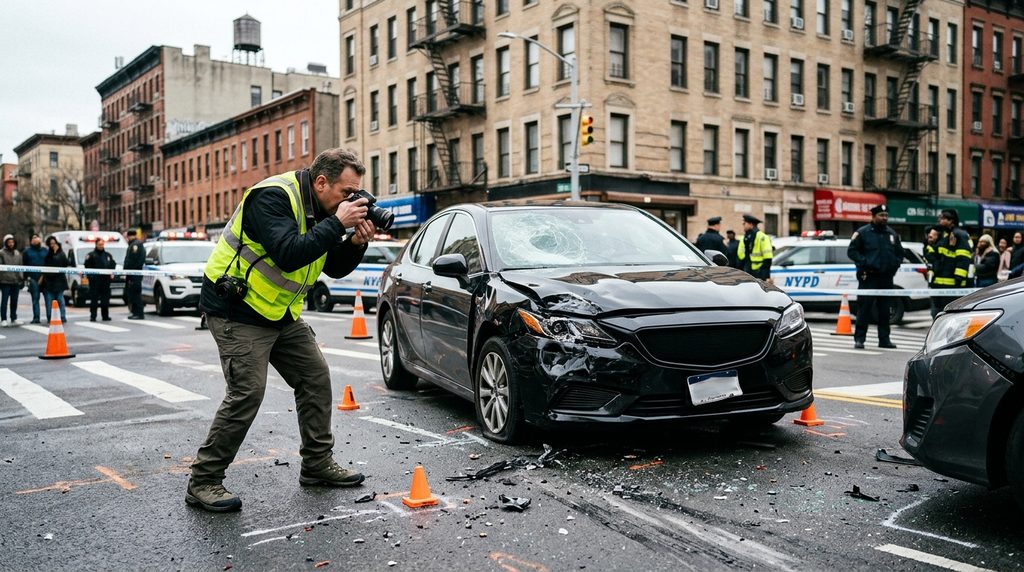
Preserving the correct information early can help establish the driver’s status and the circumstances of the collision.
Preserve Ride Information From the App
Passengers should retain relevant ride records when accessible.
Important information may include:
- Ride confirmation and receipt.
- Pickup and drop-off locations.
- Driver identification.
- Vehicle description and license plate.
- Trip date and approximate time.
- Ride status and available route information.
- Relevant communications through the platform.
Screenshots or downloaded records may help preserve details that become difficult to access later.
Collect Accident Evidence
Traditional accident evidence remains important.
| Evidence Type | Potential Importance |
| Police Report | Records accident circumstances and involved parties |
| Ride Receipt | Helps establish the booked trip |
| App Activity Records | May identify the applicable insurance period |
| Witness Statements | Supports the collision account |
| Vehicle Photographs | Documents damage and potential impact points |
| Traffic Camera Footage | May show vehicle movements |
| Medical Records | Establishes injuries and treatment |
| Insurance Documents | Identifies potentially applicable coverage |
Not every case requires every type of evidence.
However, app activity records can be particularly important when insurers disagree about whether the driver was waiting for a request or completing an accepted trip.
Preserve Medical and Financial Documentation
Medical records help establish the nature and extent of injuries.
Claimants should also preserve hospital bills, treatment summaries, employment records, and other documentation supporting financial losses.
Accurate records may become important during settlement negotiations or litigation.
What Should You Do Immediately After an Uber or Lyft Accident?
The first priority is personal safety and appropriate medical care.
After immediate hazards have been addressed, several practical steps can help preserve evidence and protect potential claims.
Seek Medical Attention
Call emergency services when necessary.
A medical evaluation can help identify injuries requiring treatment and establish an early record of the person’s condition.
Some injuries may become more apparent after the initial collision.
Report the Accident
Notify law enforcement when required and obtain relevant report information.
Passengers should also report the incident through the applicable rideshare platform.
Platform reporting does not replace required police, DMV, or insurance notifications.
Preserve Digital Records
Save available trip details, receipts, driver information, and relevant communications.
Digital records can help establish the timing and status of the trip.
Avoid Speculating About Fault
Provide accurate factual information when communicating with insurers and investigators.
Avoid guessing about vehicle speed, medical diagnoses, or circumstances that were not directly observed.
Review Insurance Deadlines
Identify applicable notice requirements, no-fault deadlines, and lawsuit filing periods.
An open insurance investigation does not automatically extend a legal filing deadline.
What Compensation May Be Available After a Rideshare Accident?
The potential compensation depends on the injuries, the legal claims available, and the insurance policies involved.
Recoverable damages may include both economic and non-economic losses when the applicable requirements are satisfied.
Economic Damages
| Damage Category | Potential Supporting Documentation |
| Medical Expenses | Hospital invoices and treatment records |
| Lost Wages | Pay records and employment statements |
| Future Medical Care | Physician opinions and treatment projections |
| Reduced Earning Capacity | Employment records and vocational assessments |
| Rehabilitation Costs | Therapy documentation |
| Other Eligible Expenses | Relevant receipts and invoices |
The availability of particular damages depends on causation, applicable insurance rules, and the legal basis of the claim.
Non-Economic Damages
Non-economic damages may include qualifying physical pain, emotional suffering, and reduced enjoyment of life.
These losses are not calculated through a universal formula.
Medical findings, injury duration, treatment history, and limitations affecting everyday activities may influence the assessment.
Does Higher Insurance Coverage Guarantee a Larger Settlement?
No.
A policy with a substantial liability limit does not establish the amount of damages an injured person is legally entitled to recover.
Settlement value depends on liability, documented injuries, compensable losses, available evidence, and other relevant factors.
Insurance limits establish available financial protection, not a guaranteed payment.
How Long Do Uber and Lyft Accident Victims Have to File a Claim?
New York generally provides a three-year statute of limitations for ordinary negligence-based personal injury lawsuits under CPLR Section 214(5).
The deadline ordinarily begins on the date of the accident, although exceptions and different filing periods can apply.
The New York State Senate’s official legislation identifies the general three-year limitations period for personal injury actions.
NYSenate.gov
Can Shorter Deadlines Apply?
Yes.
Claims involving certain government entities may involve special notice requirements and shorter deadlines.
Insurance claims can also have contractual or regulatory notice periods that are much shorter than the general lawsuit deadline.
Uninsured or underinsured motorist claims may involve additional procedural requirements.
Do Settlement Negotiations Extend the Deadline?
Not automatically.
Negotiating with an insurance company does not necessarily suspend the applicable statute of limitations.
A claimant should not rely on an ongoing insurance investigation as proof that legal filing rights remain protected.
When Should an Injured Person Contact a Rideshare Accident Attorney?
Legal guidance may be useful when a rideshare accident results in serious injuries, disputed liability, multiple insurance policies, or uncertainty about which coverage applies.

The involvement of a transportation network company does not eliminate the need to establish negligence and compensable damages.
When Legal Representation May Be Important
Situations that may justify legal evaluation include:
- Serious or permanent injuries.
- Disputes about driver app status.
- Conflicting insurance coverage positions.
- Multiple potentially responsible drivers.
- Insufficient available liability coverage.
- Disputed medical causation.
- Significant lost earnings.
- Questions about NYC TLC insurance requirements.
An experienced Uber Lyft accident lawyer may help identify the applicable legal framework, review insurance coverage, and evaluate potential claims.
How an Attorney Can Help
Depending on the case, an attorney may investigate the collision, obtain available trip records, review insurance policies, assess damages, and communicate with insurers.
More complex cases may require medical experts, accident reconstruction professionals, or economic assessments.
When litigation becomes necessary, an attorney can evaluate the relevant filing requirements and potential defendants.
For accidents involving disputed vehicle negligence, consulting a qualified car accident lawyer New York may also help clarify available legal options.
Legal representation does not guarantee a particular settlement or court outcome.
Frequently Asked Questions
1. Does Uber or Lyft insurance cover passengers injured during a ride?
Qualifying passengers may have access to applicable no-fault benefits and liability coverage when an accident occurs during an active rideshare trip. The exact insurance depends on the vehicle’s regulatory classification, the trip’s origin, the responsible parties, and the applicable policies. New York City TLC-regulated rides may follow different coverage rules from statewide TNC operations.
2. What happens if an Uber or Lyft driver causes an accident?
When a rideshare driver’s negligence causes a collision, injured passengers or other affected individuals may pursue claims involving the applicable liability insurance. Coverage depends on whether the driver was offline, waiting for a request, or completing a trip, as well as the applicable regulatory framework.
3. Can an Uber or Lyft driver recover compensation after an accident?
Yes. An injured rideshare driver may have access to qualifying no-fault benefits or liability claims, depending on the circumstances. If another motorist caused the collision, the driver may pursue compensation for legally recoverable losses. Their own contribution to the accident may affect recovery under New York’s comparative negligence rules.
4. Does New York’s $1.25 million rideshare insurance requirement apply to every Uber or Lyft accident?
No. The $1.25 million requirement applies to qualifying prearranged trips under New York’s statewide transportation network company framework. Trips originating in New York City and certain TLC-regulated or other for-hire operations follow different insurance requirements. The applicable policy and statutory framework must be identified before relying on a particular coverage limit.
5. How much is an Uber or Lyft accident settlement worth in New York?
There is no fixed settlement value. Compensation depends on liability, injury severity, medical expenses, lost income, future losses, available insurance coverage, and other relevant factors. Higher policy limits do not automatically create a higher settlement. Each claim requires an individualized assessment based on evidence and applicable law.
Conclusion
Uber and Lyft accident claims in New York require careful examination of driver activity, liability, insurance coverage, and the location and origin of the ride.
Passengers, drivers, and other injured individuals may have access to different sources of compensation depending on the circumstances. New York’s statewide transportation network company insurance rules provide important protections, while New York City maintains a separate system for TLC-regulated vehicles.
Preserving trip records, obtaining medical documentation, identifying applicable policies, and understanding relevant filing deadlines can help injured individuals protect their rights and make informed decisions about pursuing compensation.