
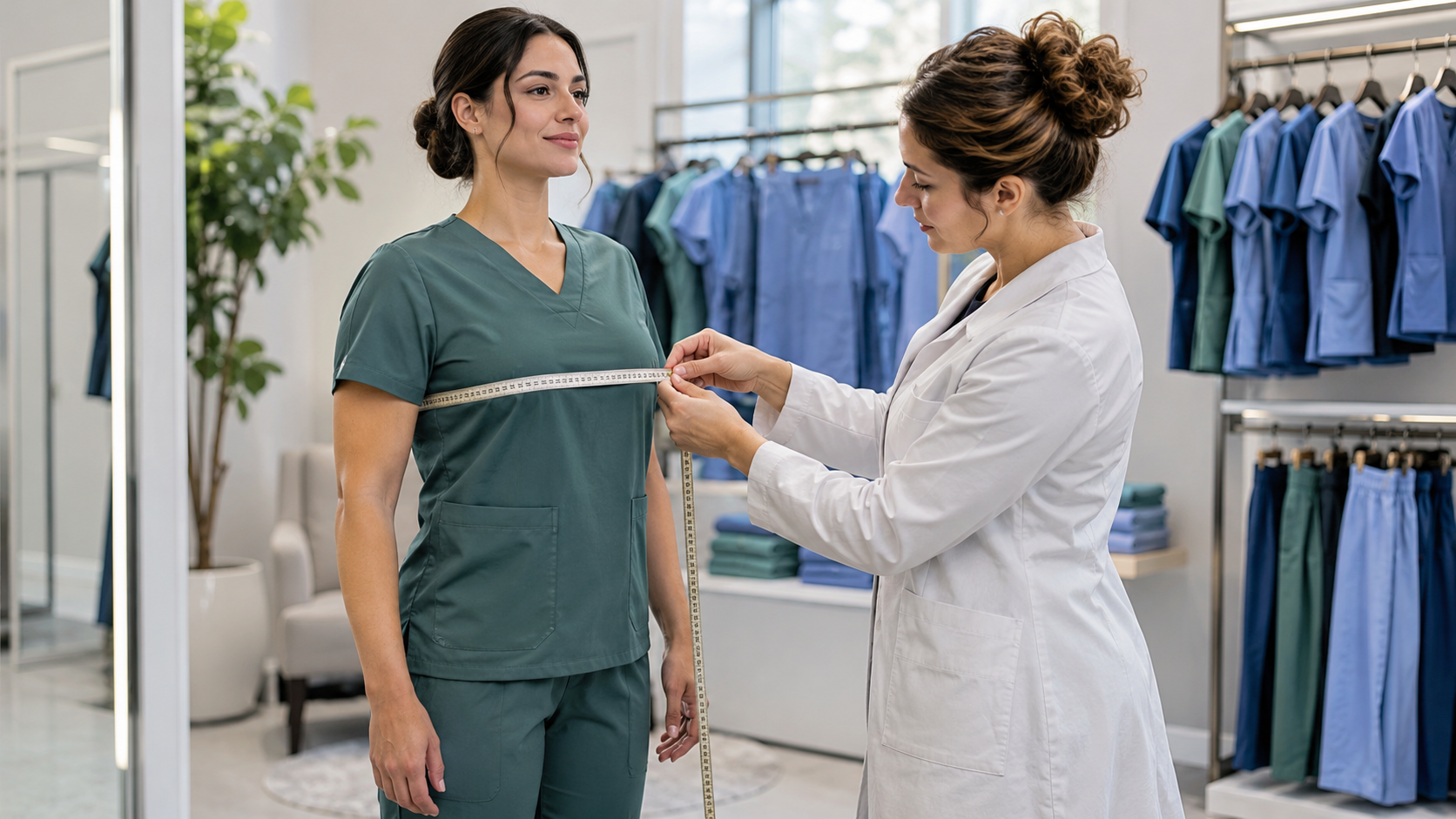
Choosing the right scrub size is about more than knowing your usual clothing size. Medical uniforms are worn for long periods and need to accommodate walking, reaching, bending, sitting, and other repeated movements throughout the workday. A scrub that fits well should provide enough room for movement while maintaining an appropriate professional silhouette.
The most reliable way to choose a size is to take accurate body measurements and compare them with the manufacturer’s sizing chart. Chest, waist, hip, inseam, and sometimes garment length all matter, and the most important measurement can vary depending on the type of garment being selected.
Quick Answer
The best way to determine your scrub size is to measure your body accurately and compare those measurements with the specific manufacturer’s size chart. Do not rely solely on your usual street-clothing size because sizing can vary between manufacturers, garment styles, and cuts.
The most useful measurements are:
- Chest: Measure around the fullest part of the chest or bust.
- Waist: Measure around the area where the trousers normally sit.
- Hip: Measure around the fullest part of the hips.
- Inseam: Measure from the crotch to the bottom of the leg.
- Back length: Useful when evaluating tops, jackets, and other garments where torso length matters.
- Height: Helpful when choosing regular, petite/short, or tall lengths.
The goal is not simply to find the largest or smallest measurement that fits. It is to identify a size that provides a balanced fit across the areas that matter for the particular garment.
Why Does Scrub Sizing Matter?
Healthcare professionals can spend many hours in the same uniform.
A poor fit can become increasingly noticeable during a long shift.
A scrub top that is too tight may pull across the shoulders when reaching. Pants that are too loose may shift during movement. An incorrect inseam can leave pants too short or cause excess fabric around the ankle.
Proper sizing can therefore affect:
- Comfort
- Mobility
- Professional appearance
- Pocket placement
- Waistband comfort
- Garment longevity
- Overall confidence while working
Sizing is especially important because medical scrubs are workwear rather than occasional clothing.
Why Should You Measure Instead of Guessing Your Size?
Your usual clothing size is only a starting point.
Sizing can vary because manufacturers use different:
- Size ranges
- Grading systems
- Garment cuts
- Fits
- Fabric compositions
- Measurement standards
A person who normally wears a medium in one type of clothing may require a different size in another garment.
The most reliable method is therefore to measure your body and use the relevant size chart.
What Measurements Do You Need for Scrubs?
A basic sizing process usually requires four primary measurements:
- Chest or bust
- Waist
- Hip
- Inseam
Some sizing systems also include back length.
A sizing chart can provide a useful reference for translating these body measurements into garment sizes. However, the chart for the specific manufacturer and garment should always take priority over generalized clothing-size assumptions.
How to Measure Your Chest
Stand naturally with your arms relaxed at your sides.
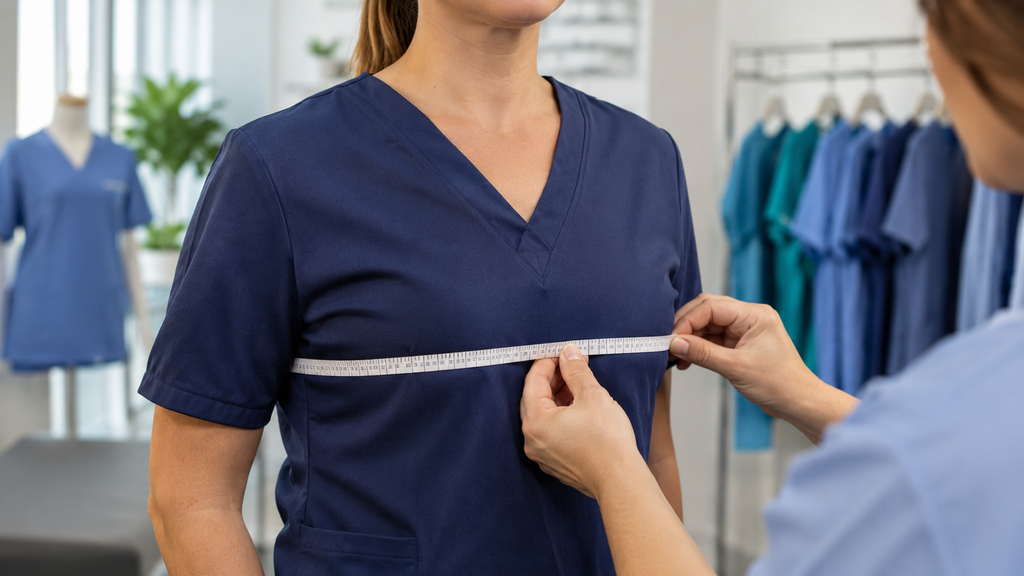
Wrap the measuring tape around the fullest part of your chest.
The tape should remain:
- Horizontal
- Comfortable
- Neither tight nor loose
- Close to the body without compressing it
Do not hold your breath or expand your chest while measuring.
The goal is to capture your normal body measurement rather than a deliberately smaller measurement.
How to Measure Your Bust
For women’s sizing, the bust measurement is generally taken around the fullest part of the bust.
Keep the tape level around the body.
Avoid pulling the tape tightly because doing so can produce a measurement that is smaller than your actual body circumference.
A properly taken measurement gives you a more reliable starting point when selecting women’s scrubs.
How to Measure Your Waist
Measure around the area where your trousers normally sit.
The tape should be comfortably positioned rather than pulled tightly.
Do not intentionally draw in your stomach.
A relaxed measurement is more useful because the waistband needs to remain comfortable while standing, sitting, bending, and moving.
How to Measure Your Hips
Stand naturally with your heels together.
Wrap the tape around the fullest part of your hips.
Make sure the tape remains level rather than dropping toward the front or back.
The hip measurement can be particularly important when choosing scrub pants because the garment needs enough room for movement without becoming excessively loose.
How to Measure Your Inseam
The inseam measures the inside length of the leg.
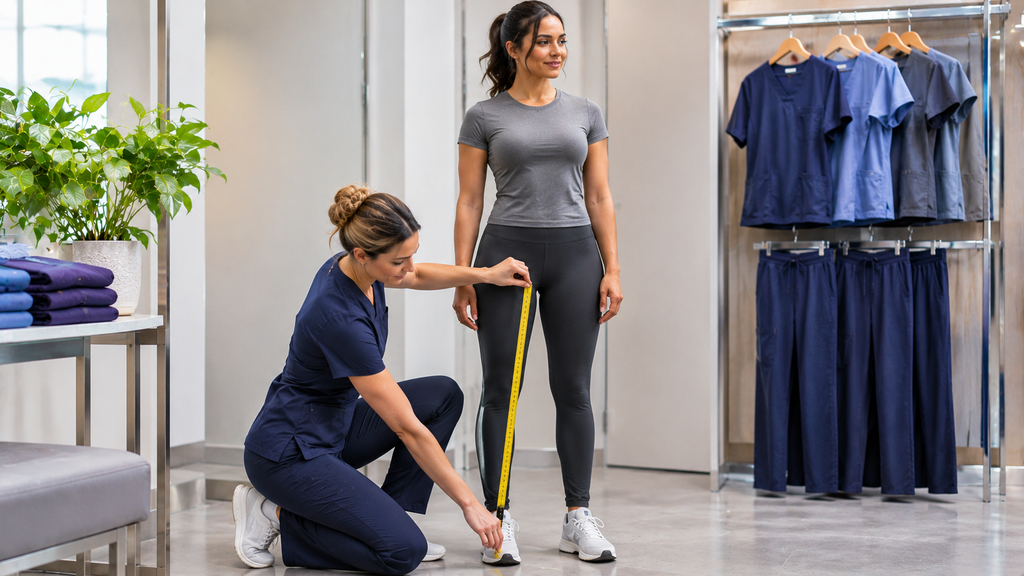
One practical method is to take a pair of well-fitting pants made from a similar type of material and measure from the crotch to the bottom of the leg.
If measuring the body directly, stand naturally and measure from the crotch area down along the inside of the leg to the point where you want the pant to end.
Why Is Inseam Important for Scrub Pants?
Two people can have the same waist size but need different pant lengths.
For example, someone with longer legs may find a regular inseam too short, while a shorter wearer may experience excess fabric around the ankle.
An incorrect inseam can affect:
- Overall appearance
- Comfort
- Movement
- Shoe interaction
- Cuff placement
- Pant drape
This is why waist size alone should not determine your scrub-pant selection.
What Is Back Length?
Back length measures the vertical length of a garment from the high point of the shoulder to the bottom opening.
It can be useful when evaluating tops and jackets.
A garment that is too short may provide insufficient coverage, while one that is excessively long may create unnecessary fabric.
When a manufacturer’s sizing chart includes back length, use it as an additional measurement rather than relying solely on overall height.
How Should You Measure Yourself for Scrub Tops?
For scrub tops, focus primarily on:
- Chest or bust
- Shoulder fit
- Torso length
- Sleeve length
- Waist or hip area, depending on the cut
The chest or bust measurement is often a useful starting point, but it should not be considered in isolation.
A person with broader shoulders may need more room in the upper body even if their waist measurement suggests a smaller size.
How Should You Measure Yourself for Scrub Pants?
For scrub pants, focus on:
- Waist
- Hip
- Inseam
- Rise
- Thigh room
Waist and hip measurements help establish the appropriate overall size, while inseam determines the length.
The rise and leg shape then influence how the pants actually feel when moving.
What Is the Difference Between Body Measurements and Garment Measurements?
This distinction is important.
A body measurement describes the circumference or length of your body.
A garment measurement describes the actual dimensions of the finished clothing.
A garment with stretch may have a finished measurement that is smaller than the body measurement it is designed to accommodate.
Therefore, do not automatically compare your body measurements to a garment’s physical measurements unless the manufacturer specifically instructs you to do so.
Should You Measure Over Clothing?
For the most accurate result, measure as close to the body as practical.
Heavy clothing can add unnecessary circumference.
If you must measure over clothing, use a thin layer and keep the tape positioned consistently.
The same principle applies when measuring chest, waist, and hips.
Should You Pull the Measuring Tape Tight?
No.
The tape should sit comfortably against the body.
Pulling it tightly can make the measurement artificially small and may lead to choosing a garment that feels restrictive.
The goal is an accurate measurement, not the smallest possible number.
Should Someone Else Take Your Measurements?
It can be helpful.
A second person can make it easier to keep the tape level around the body and ensure that it is positioned correctly.
This can be particularly useful for:
- Bust measurement
- Back length
- Inseam
- Shoulder-related measurements
If measuring yourself, use a mirror to check that the tape remains level.
How Should You Choose Between Two Sizes?
Sometimes your measurements may fall near the boundary between two sizes.
Do not automatically choose the larger size.
Instead, consider:
- Which measurement is closest to the boundary?
- Is the garment fitted or relaxed?
- Does the fabric stretch?
- Will you layer underneath?
- Does the garment need additional movement room?
- Which body area is most important for the garment?
For a scrub top, chest or bust and shoulder fit may be particularly important.
For scrub pants, waist, hip, and inseam deserve greater attention.
What If Your Measurements Fall Into Different Size Ranges?
This is common.
For example, your chest may correspond to one size while your waist or hip corresponds to another.
This does not necessarily mean you measured incorrectly.
Body proportions differ, and garments are designed around standardized size ranges.
When this happens, examine the garment’s cut and construction.
A relaxed garment may accommodate different proportions more easily than a highly fitted one.
Should You Size Up for Better Comfort?
Not automatically.
Sizing up can provide additional room, but it may also create:
- Excess fabric
- Poor pocket placement
- Oversized shoulders
- Longer sleeves
- Excess fabric around the waist
- A less controlled silhouette
The better solution is to choose a garment with an appropriate cut and fabric rather than automatically moving to a larger size.
Should You Size Down for a More Fitted Look?
Usually not if doing so compromises movement.
Healthcare uniforms need to accommodate normal work activities.
A scrub top should not pull excessively when you reach forward, and pants should not restrict movement around the hips or thighs.
A professional appearance comes from an appropriate fit, not necessarily a smaller size.
How Does Stretch Affect Scrub Sizing?
Stretch can change how a garment accommodates body movement.
A scrub containing elastane or spandex may have greater flexibility than a comparable non-stretch garment.
However, stretch does not eliminate the need for correct sizing.
A garment can stretch, but excessive tightness may still affect comfort, appearance, and fabric recovery.
The ideal fit allows movement without relying on constant fabric tension.
Does Fabric Weight Affect Sizing?
Not directly in terms of the size chart, but it can affect how a garment feels.
A lightweight fabric may drape differently from a heavier fabric.
A structured fabric may also feel more fitted than a soft, flexible fabric at the same nominal size.
This is why sizing should always be considered alongside fabric and garment construction.
How Does Garment Cut Affect Scrub Sizing?
Cut is one of the reasons two garments in the same nominal size can feel different.
A garment may be:
- Relaxed
- Regular
- Tailored
- Tapered
- Athletic
- Oversized
For example, a tapered scrub pant can feel more fitted through the lower leg than a straight-leg style even when the waist size is identical.
The size number does not tell the entire story.
How Does Scrub Top Style Affect Sizing?
Different top silhouettes distribute fabric differently.
A V-neck top, for example, may have a different neckline and torso shape from a mock-wrap or crew-neck top.
Some tops may include:
- Side vents
- Princess seams
- Back darts
- Shaped panels
- Relaxed side openings
These design details can affect how the garment fits even when the labeled size is the same.
How Does Scrub Pant Style Affect Sizing?
Pant silhouettes can significantly change the wearing experience.
Common options include:
- Joggers
- Tapered pants
- Straight-leg pants
- Wide-leg pants
- Flare pants
A jogger typically narrows toward the ankle.
A wide-leg pant maintains greater room through the lower leg.
A tapered pant sits between a traditional straight silhouette and a more fitted ankle.
Therefore, choosing the correct waist size does not automatically mean every pant style will fit the same way.
How Do You Choose the Right Scrub Pant Length?
Start with your inseam.
Then consider:
- Your height
- Shoe type
- Desired ankle position
- Pant silhouette
- Whether the style is regular, short/petite, or tall
Height should be treated as a guide rather than an absolute sizing rule because people of the same height can have different leg-to-torso proportions.
What Is the Difference Between Petite, Short, Regular, and Tall?
These terms generally describe garment length rather than simply overall body size.
A petite or short option may have a shorter inseam.
A tall option generally provides a longer inseam.
Regular falls between the two.
Importantly, a shorter person does not necessarily need a smaller overall size.
Someone can have a larger waist or hip measurement and still need a short inseam.
Likewise, a taller person may need a tall length without needing a larger waist size.
Can Short People Wear Regular Scrub Pants?
Yes, but the result depends on the garment and the individual’s proportions.
A regular-length pant may work if the inseam is appropriate or if the wearer prefers additional length.
However, if regular pants consistently bunch around the ankle, a short or petite option may provide a better proportion.
Can Tall People Wear Regular Scrub Pants?
They can, but insufficient inseam length may cause the pants to sit higher than intended.
If the pant repeatedly falls above the preferred ankle position, a tall option may be more appropriate.
Height alone should not determine the choice; inseam remains the more useful measurement.
How Should You Choose Sizes for Women?
Start with:
- Chest or bust measurement
- Waist measurement
- Hip measurement
- Inseam
- Height
When measurements fall between sizes, consider the garment’s cut, stretch, and intended fit.
For a broader range of women’s options, review the relevant women’s scrubs category and use the sizing information provided for each garment.
How Should You Choose Sizes for Men?
Start with:
- Chest
- Waist
- Hip
- Inseam
- Height
Men’s sizing should not be assumed to follow the same measurements or proportions as women’s sizing.
Use the relevant men’s scrubs sizing information when selecting garments.
How Does Height Affect Scrub Fit?
Height primarily becomes important when selecting garment length.
Two people with identical waist measurements can require different pant lengths.
Height can also affect:
- Shirt length
- Sleeve length
- Jacket length
- Pant proportions
This is why height and inseam should be considered together.
Why Is Inseam Sometimes More Useful Than Height?
Height does not tell you exactly how long your legs are.
Two people of the same height can have different leg-to-torso proportions.
Inseam measures the actual inside-leg length and can therefore provide more specific information when selecting pants.
Height remains useful for understanding whether regular, short/petite, or tall sizing may be appropriate, but inseam can provide the finer distinction.
How Should You Check the Fit After Receiving Scrubs?
Do not judge the fit only while standing still.
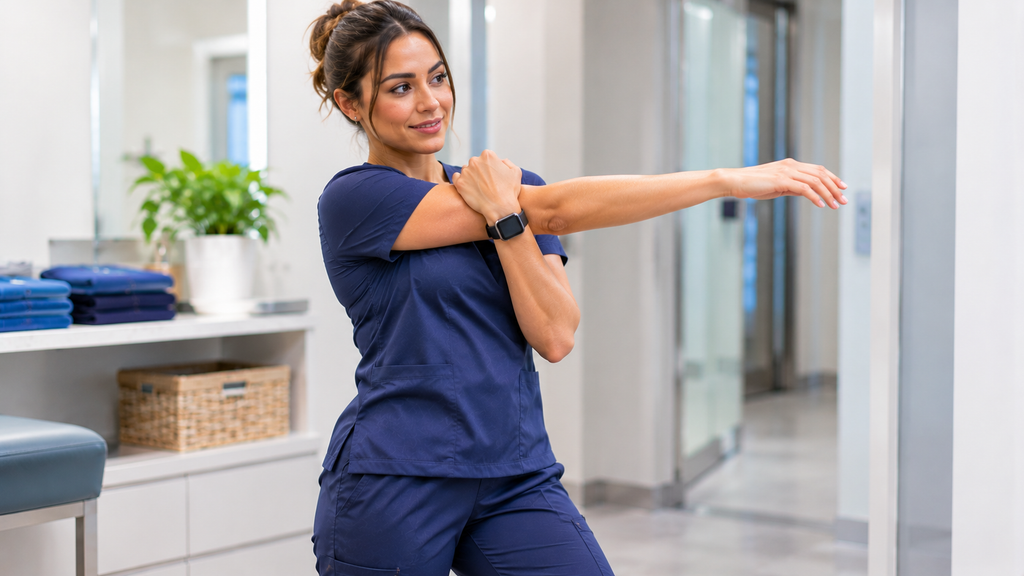
Perform a basic movement test.
For Tops
- Raise both arms.
- Reach forward.
- Bend your elbows.
- Twist naturally.
- Sit down.
- Check the hem.
For Pants
- Walk.
- Sit.
- Squat carefully.
- Bend your knees.
- Check the waistband.
- Check the ankle position.
The garment should remain comfortable throughout these movements.
What Are Signs That a Scrub Top Is Too Small?
Look for:
- Pulling across the chest
- Restricted shoulders
- Tight upper arms
- Excessive tension around the waist
- Side vents opening unnecessarily
- Hem riding upward during movement
- Difficulty raising the arms
If several of these occur, the garment may be too small or the cut may not suit your body proportions.
What Are Signs That a Scrub Top Is Too Large?
Look for:
- Excess fabric around the torso
- Dropped shoulders
- Sleeves extending too far
- Large gaps around the neckline
- Excessively long hem
- Pockets sitting too low
- Fabric bunching during movement
A larger size is not necessarily more comfortable.
The goal is sufficient room without excessive fabric.
What Are Signs That Scrub Pants Are Too Small?
Look for:
- Waistband pressure
- Tightness across the hips
- Pulling across the seat
- Restricted knee movement
- Pockets opening or pulling
- Excessive fabric tension while sitting
- Difficulty bending
These signs suggest that the pants may need a larger size or a different cut.
What Are Signs That Scrub Pants Are Too Large?
Look for:
- Waistband slipping
- Excess fabric around the hips
- Excessive bunching
- Pockets sitting away from the body
- Excess fabric around the ankles
- Need for constant adjustment
A different pant silhouette may sometimes solve the problem better than simply changing size.
What If the Waist Fits but the Hips Do Not?
This is a common proportion issue.
Depending on the garment, you may need:
- A different size
- A stretch fabric
- A different pant cut
- A more relaxed silhouette
Trying to force a garment into a single standard body proportion can create discomfort.
The goal is to find a cut that accommodates the body naturally.
What If the Hips Fit but the Waist Is Too Loose?
A different pant construction may help.
Consider:
- Adjustable waistbands
- Drawstrings
- Elastic waistbands
- Different rise options
- A different size paired with a more forgiving waistband
Do not rely on tightening the waistband excessively because that can create bunching and discomfort.
How Does Waistband Design Affect Fit?
Waistband design can significantly change comfort.
Common constructions include:
- Elastic waistband
- Drawstring waistband
- Half-elastic waistband
- Yoga waistband
- Combination waistband
A drawstring can provide adjustability.
An elastic waistband can provide flexibility.
A yoga waistband can provide a broader, smoother contact area.
The best choice depends on personal preference and work activity.
How Should You Choose Scrubs for Long Shifts?
Long shifts make small fit problems more noticeable.
Prioritize:
- Comfortable waistbands
- Appropriate inseam
- Shoulder mobility
- Breathable fabric
- Useful stretch
- Proper torso length
Try not to select a garment solely because it looks good while standing in front of a mirror.
Movement and extended wear are better tests.
How Should You Choose Scrubs for Active Jobs?
For high-movement work, make mobility a priority.
Look for:
- Stretch
- Appropriate shoulder room
- Comfortable rise
- Adequate thigh room
- Flexible waistband
- Proper inseam
The garment should move with the body rather than require the wearer to compensate for restrictive areas.
How Should You Choose Scrubs for a More Polished Appearance?
A polished appearance usually comes from proportion and fit.
Consider:
- Correct shoulder width
- Appropriate torso length
- Clean pant break
- Controlled fabric volume
- Consistent color
- Proper garment maintenance
A garment that is too large or too small can appear less polished regardless of its fabric or design.
Should You Buy Scrubs Based on Your Old Scrub Size?
Use your old size as a reference, not as the final answer.
Your measurements may have changed, and different styles can have different fits.
Measure again before purchasing a new uniform, particularly if:
- You are buying from a new manufacturer.
- You are choosing a different garment style.
- You are selecting a different fabric.
- You have changed body proportions.
- You are switching from regular to tall or short sizing.
How Often Should You Recheck Your Measurements?
You do not necessarily need to measure before every purchase.
However, remeasure when your body proportions change or when you have experienced repeated sizing problems.
It is also useful to recheck measurements when moving into a different size range.
Keep your measurements recorded so that they are easy to reference when shopping.
Can Stretch Make a Wrong Size Feel Right?
Temporarily, perhaps, but that does not make it the correct size.
A highly flexible garment can accommodate some additional variation.
However, excessive stretching can affect:
- Comfort
- Appearance
- Fabric recovery
- Seam stress
- Garment longevity
The best fit is one that works without requiring constant stretching.
Does One Size Fit All Body Types?
No.
Standardized sizing is designed to accommodate a range of body measurements, but individuals have different proportions.
Someone may have:
- Broad shoulders
- A narrow waist
- Longer legs
- A shorter torso
- Fuller hips
- Longer arms
This is why garment cut and style are important after determining the basic size.
What Is the Best Way to Record Your Measurements?
Create a simple measurement record containing:
| Measurement | Your Measurement |
| Chest/Bust | ___ |
| Waist | ___ |
| Hip | ___ |
| Inseam | ___ |
| Height | ___ |
| Back Length, if needed | ___ |
Keep the record somewhere accessible when shopping for uniforms.
Update it whenever your measurements change significantly.
How Should You Use a Scrub Size Chart?
Follow this process:
Step 1: Measure Yourself
Take accurate chest, waist, hip, and inseam measurements.
Step 2: Identify the Garment
Determine whether you are buying a top, pants, jacket, or complete set.
Step 3: Find the Correct Chart
Use the relevant men’s or women’s chart.
Step 4: Compare Measurements
Identify the size range that corresponds most closely to your body.
Step 5: Check Length
Review regular, short/petite, or tall options where available.
Step 6: Consider the Cut
Check whether the garment is relaxed, tapered, fitted, or another silhouette.
Step 7: Consider Fabric
Stretch and fabric construction can influence the final feel.
Step 8: Test Movement
After receiving the garment, move naturally to evaluate the fit.
Why Should You Check the Size Chart for Every New Style?
A manufacturer’s general size chart provides a baseline, but individual garments can have different cuts.
A jogger, jacket, and scrub top do not necessarily fit the same way.
The product’s specific description can also provide useful information about construction and intended fit.
Therefore, do not assume that one size automatically works across every garment style.
What If a Garment Is Between Sizes?
When between sizes, consider the intended fit.
A relaxed garment may allow more flexibility.
A fitted garment may require more careful sizing.
Stretch can also affect the decision.
The most important consideration is where the additional room is needed.
For example, if a top is comfortable around the waist but restrictive across the shoulders, simply sizing down would not solve the problem.
How Should You Choose Sizes When Buying Online?
Because online purchases cannot be tried on beforehand, measurement becomes especially important.
Before selecting a size:
- Take current measurements.
- Review the size chart.
- Check the garment description.
- Look for length options.
- Review the fabric composition.
- Consider the intended fit.
- Check the retailer’s return or exchange policy.
The retailer’s own sizing information should be followed when available.
Key Takeaways
Choosing the right scrub size is primarily a measurement and fit exercise rather than a guess based on your usual clothing size.
The most important points are:
- Measure before buying: Chest, waist, hip, and inseam provide a useful foundation.
- Use the correct size chart: Men’s and women’s sizing should be evaluated separately.
- Check the inseam: Height alone does not determine pant length.
- Consider garment cut: Joggers, tapered pants, jackets, and tops can fit differently.
- Do not automatically size up: Extra fabric does not always equal extra comfort.
- Do not automatically size down: A smaller garment can restrict movement.
- Consider stretch: Stretch can improve mobility but does not replace correct sizing.
- Check movement: Raise your arms, bend, sit, walk, and move naturally when evaluating fit.
- Consider body proportions: Waist, hips, shoulders, and inseam do not always correspond to one standard size.
- Use short, regular, and tall options when available: They can improve proportion without changing the overall garment size.
- Recheck measurements when needed: Body measurements and preferred fit can change over time.
A well-fitting uniform should feel comfortable during the entire workday rather than simply fitting correctly while standing still.
Frequently Asked Questions
How do I know what size scrubs to buy?
Measure your chest or bust, waist, hips, and inseam, then compare those measurements with the manufacturer’s relevant size chart. Do not rely exclusively on your usual clothing size because sizing varies between manufacturers and garment styles.
Should scrub pants be loose or fitted?
Scrub pants should provide enough room for normal movement without excessive fabric. The ideal amount of room depends on the silhouette, fabric stretch, work activity, and personal preference.
How do I measure my inseam for scrubs?
Measure from the crotch to the point where you want the pant leg to end. Another practical method is measuring a well-fitting pair of pants made from a similar material. The important point is to compare the measurement with the manufacturer’s stated inseam options.
Should I size up in medical scrubs?
Not automatically. Size up only when your measurements or the garment’s cut indicate that additional room is needed. An oversized scrub can create excess fabric, affect pocket placement, and reduce the polished appearance of the uniform.
What if my waist and hip measurements indicate different sizes?
This can happen because body proportions vary. Consider the garment’s cut, fabric stretch, waistband design, and sizing guidance. You may need a different silhouette rather than simply choosing a larger or smaller size.
Are tall and petite scrub sizes based on height?
Height is one factor, but inseam is often more useful for determining pant length. Two people of the same height can have different leg proportions, so the actual inseam should be considered when available.
How should scrubs fit around the shoulders?
The shoulders should allow comfortable arm movement without pulling or excessive fabric. Raise your arms, reach forward, and bend your elbows when checking the fit.
Can I use my normal clothing size when buying scrubs?
You can use it as a starting reference, but it should not replace measuring yourself and checking the manufacturer’s size chart. Scrub sizing and garment cuts can differ from everyday clothing.
How should I check scrub fit after buying?
Try the garment while performing realistic movements. Walk, sit, bend, reach, raise your arms, and check whether the waistband, sleeves, pockets, hem, and inseam remain comfortable.
Conclusion
Finding the right scrub size starts with accurate measurements and ends with evaluating how the garment performs during movement. Chest, waist, hip, inseam, and sometimes back length all contribute to the final fit, while height can help determine whether regular, short, petite, or tall lengths are appropriate.
The most important principle is to avoid treating a size label as a universal measurement. A medium from one manufacturer may not fit like a medium from another, and two garments carrying the same size can feel different because of their fabric, construction, and silhouette.
For professionals shopping for women’s scrubs, measurements across the bust, waist, hips, and inseam can help establish a more reliable starting point. Men’s sizing similarly benefits from accurate chest, waist, hip, and inseam measurements. The key is to use the appropriate size chart for the garment rather than relying on assumptions based on previous purchases.
Fit should also be tested through movement. A uniform that feels comfortable while standing may become restrictive when reaching, bending, sitting, or walking. The best size is therefore the one that provides sufficient room for normal activity while maintaining the intended shape and appearance of the garment.
Finally, remember that sizing is only one part of choosing medical scrubs. Fabric, stretch, waistband construction, garment cut, pocket placement, and workplace requirements all influence how useful a uniform will be.
The goal is simple: choose a size based on accurate measurements, select the appropriate length and cut, and make sure the finished garment supports the movements required throughout the workday.